
First Day at the Gym: What to Do, What to Bring, What to Avoid
Walking into a gym for the first time is one of the most intimidating things you can do. Every machine looks complicated. Every person around you seems to know exactly what they’re doing. And the question screaming in your head is: first day at gym what to do?
I’m Richi Singh, and I’ve been a personal fitness trainer in Delhi for over 12 years. I’ve watched thousands of first-timers walk through that door. The ones who come back aren’t the ones who knew everything on day one. They’re the ones who showed up, started small, and trusted the process. If you’re here, you’re already ahead of most people who think about going to the gym but never actually go.

Before You Go: What to Bring
Most beginners either overpack or show up with nothing but gym clothes. Here’s a realistic checklist:
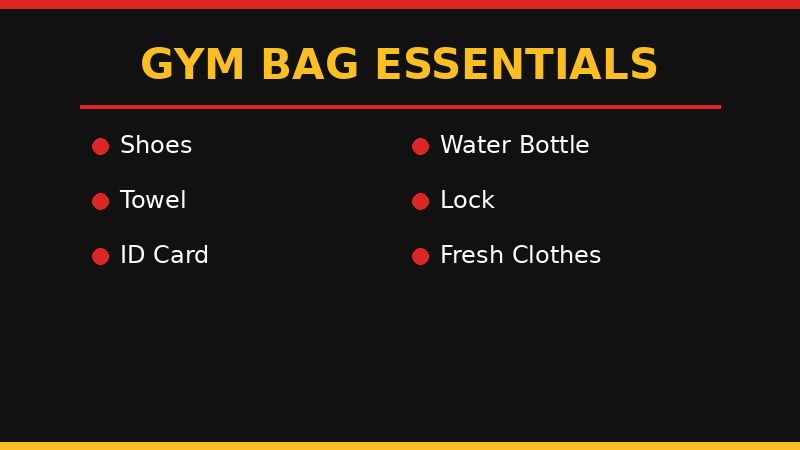
Bring this:
- Shoes – Cross-trainers or flat-soled sneakers. Avoid super soft foam running shoes – they make compound movements feel unstable.
- Water bottle – A 1-litre bottle. Most Delhi gyms have water dispensers, but don’t rely on it.
- Small towel – Wipe machines before and after use. Basic etiquette and hygiene.
- Change of clothes – You’ll sweat more than expected. Fresh undergarments make a big difference post-workout.
- Lock – For gym lockers. Keep only your phone and wallet inside.
- Phone – For music and tracking. Leave the wallet at home – keep it minimal.
- Photo ID – Some Delhi gyms require it for first-visit registration. Carry your Aadhaar or driving licence.
Leave this at home:
- Expensive jewelry
- Your full wallet
- Pre-workout supplements you’ve never tried before
- The need to impress anyone
What to Wear on Day One
Nobody at the gym is watching what you wear. But the right clothes make your session 10 times more comfortable.
- T-shirt: Dry-fit or polyester. Avoid 100% cotton – it soaks sweat, gets heavy, and takes forever to dry. A simple plain tee is fine. You don’t need branded gym wear on day one.
- Shorts or track pants: Whatever you can move freely in. Avoid joggers that bunch at the ankles. Knee-length shorts are ideal for Delhi’s heat.
- Underwear: Supportive briefs or compression shorts. Don’t skip this – it matters more than you think during squats and lunges.
- Socks: Full-length or ankle socks. No show socks – they’ll slip inside your shoes during movements.
- Shoes: Flat, stable, and secure. Not flip-flops, not chappals.
Don’t buy a full gym wardrobe before your first session. Wear what you already own that meets these criteria. After a couple of weeks, you’ll know what works for your body.
The 3-3-3 Rule Explained
This is the rule I give every single beginner on day one. It’s simple, it’s not intimidating, and it works.
The 3-3-3 rule means: 3 exercises, 3 sets, 3 reps each. Nine total reps of movement. That’s your entire workout for the first session.
Here’s how it breaks down:
- Bodyweight squat – The fundamental lower-body movement
- Wall push-up – Upper-body strength without the stress of floor push-ups
- Bodyweight plank – Core stability, held for time instead of counted reps
Do three sets of each exercise. Rest 60-90 seconds between sets. Move to the next exercise only when you’ve finished all three sets of the current one.
The beauty of the 3-3-3 rule is that it’s almost impossible to fail. Even on your worst day, you can do nine bodyweight squats, nine wall push-ups, and hold three short planks. That’s enough to build the habit and leave the gym feeling like you accomplished something. Over the following weeks, you’ll add reps, add weight, and add exercises. But on day one? Keep it at 3-3-3.

The 3/2/1 Rule Explained
Once you’re past your first week, the 3/2/1 rule becomes your go-to framework. It’s how I structure most beginner programs.
- 3 compound movements – Exercises that work multiple muscle groups at once: squats, push-ups, rows, and lunges. These give you the most bang for your buck.
- 2 accessory exercises – Targeted movements like bicep curls, tricep dips, or shoulder raises. They fill in the gaps.
- 1 cardio finisher – Five to ten minutes on the treadmill, stationary bike, or rowing machine. Ends the session on a high note.
A sample 3/2/1 workout: goblet squats + push-ups + dumbbell rows (compounds), bicep curls + tricep pushdowns (accessory), treadmill walk at incline (finisher). This framework scales with you – add weight, swap exercises, increase intensity – but the 3/2/1 structure stays the same.
How Should a Beginner Start at the Gym?
This is one of the most-searched questions, and the answer is straightforward:
Start with a full-body routine, 2-3 days per week. Not a bro-split. Not six days a week. Full-body hits every major muscle group in every session, which means more frequent stimulation for a beginner. That matters more than high volume.
Focus on form, not weight. The biggest mistake I see in Delhi gyms is someone loading up the barbell with plates they can’t control. Bad form leads to injury, and an injured beginner is a beginner who quits. Start with the empty bar. Start with bodyweight. Your ego will recover. Your lower back might not.
Keep sessions to 20-30 minutes initially. Your body is adapting to a completely new stimulus. Twenty to thirty minutes of focused, quality movement is plenty for the first two to three weeks. You can extend to 45 minutes as you build stamina.
Track your progress. Keep a notes app on your phone. Write down what you did. Next week, you’ll do slightly more. That number going up is the real win.
Should I Gym on an Empty Stomach?
It depends on your workout timing.
If you’re working out at 6 or 7 AM (the popular Delhi slot), have a small snack 20-30 minutes before you leave. A banana is perfect – natural sugars for quick energy and potassium for muscle function. Two dates work too. A slice of peanut butter toast is also great.
If you’re working out after breakfast or lunch, you’re fine. Eat a regular meal 1.5-2 hours before the gym. If you’re working out in the evening after work, a small snack 30-45 minutes before helps – a fruit, handful of peanuts, or granola bar.
For light activity only – walking, stretching – fasted training is fine. For anything involving weights or higher intensity, eat something small first. Don’t overcomplicate this. The priority is showing up consistently.
First Day at Gym What to Do: Your 20-Minute Workout Plan
This is the exact 20-minute workout I give every first-timer.
Warm-up (3 minutes):
- 1 minute brisk walk on the treadmill
- 30 seconds arm circles
- 30 seconds torso twists
- 30 seconds leg swings (hold onto something)
- 30 seconds neck and shoulder rolls
Main Workout (12 minutes):
Bodyweight Squats – 3 sets of 10-12 reps
Stand with feet shoulder-width apart. Lower yourself as if sitting back into a chair. Go as deep as you comfortably can. Push through your heels to stand. Keep your chest up. Rest 90 seconds between sets.
Wall Push-Ups – 3 sets of 8-10 reps
Place hands on a wall at shoulder height, slightly wider than shoulder-width. Step your feet back so your body forms a straight line. Lower your chest toward the wall, then push back. Rest 90 seconds between sets.
Bodyweight Plank – 3 sets of 20-30 seconds
Elbows on the floor, body in a straight line from head to heels. Don’t let your hips sag. If 20 seconds feels impossible, hold for as long as you can. Rest 60 seconds between sets.
Cool-down (5 minutes):
- 30 seconds quad stretch each leg
- 30 seconds hamstring stretch each leg
- 30 seconds chest opener
- 30 seconds shoulder stretch each arm
- 1 minute deep breathing
Total time: roughly 20 minutes. That’s it. If you finish with energy, add a 5-minute treadmill walk. Don’t push further on day one.

Gym Etiquette in Delhi
Delhi has its own gym culture. Understanding the unwritten rules makes your first few weeks smoother.
Re-rack your weights. If you pick up a dumbbell, put it back in the same spot. Don’t leave it on the floor or a bench.
Wipe down the machine. Most Delhi gyms have spray bottles at each station. Use them before and after.
Don’t hog equipment. Don’t sit on the bench scrolling between sets. If there’s a line forming, finish up and move on.
Ask for a spot politely. “Bhai, can you spot me on this?” is perfectly acceptable. Most people are happy to help a beginner.
Phone etiquette. Keep your phone on silent. Don’t take calls on the gym floor. And don’t film yourself working out on your first day.
Use deodorant. In Delhi’s heat and humidity, this goes a very long way. For you and everyone around you.
Don’t give unsolicited advice. Unless someone is about to seriously hurt themselves, leave it. Nobody likes a know-it-all on their first day.

Frequently Asked Questions
What is the 3-3-3 rule for gym?
The 3-3-3 rule means 3 exercises, 3 sets of 3 reps each. It’s a beginner-friendly structure designed to remove the intimidation factor from your first gym session. Just nine reps per exercise. For more on beginner programming, see our personal fitness training services.
What is the 3/2/1 rule in gym?
The 3/2/1 rule means 3 compound movements, 2 accessory exercises, and 1 cardio finisher. It’s a simple framework for building full-body workouts once you’re past your first week.
How should a beginner start at the gym?
Start with a full-body routine 2-3 days per week, focus on form over weight, and keep sessions to 20-30 minutes. Our guide on how to do squats properly is a great place to learn one of the most important beginner exercises.
Should I gym on an empty stomach?
For morning workouts, have a small pre-workout snack like a banana or dates 20-30 minutes before. For afternoon or evening sessions, eat a regular meal 1.5-2 hours before. For light activity only, fasted training is fine.
What is a good pre-workout meal for Indian beginners?
Banana, dates, peanut butter toast, a small bowl of curd with fruit, or a simple omelette. Eat 30-60 minutes before your workout. Avoid heavy or spicy meals right before training.
How many days a week should a beginner go to the gym?
2-3 days per week. Your body needs time to recover. Going every day in your first month leads to burnout. Pick consistent days and build the habit.
Final Takeaway
Your first day at the gym is not about how much you lift or how you look. It’s about showing up, doing something small, and walking out knowing you took a step in the right direction.
The 3-3-3 rule gives you a starting point. The 3/2/1 rule gives you a framework as you progress. The real secret is consistency – showing up again and again, even when it feels awkward. Progress in the gym is almost never visible in the mirror on day one. It’s visible in the fact that three weeks from now, those squats feel easier than they did today.
If you’re in Delhi and looking for a trainer who understands what first day at gym what to do really means, book a session with me at Richi Fitness. I’ve been where you are. I know what the first day feels like. And I know how to make the days after it better.
See you at the gym.
Related: First Day at the Gym: What to Do, What t