
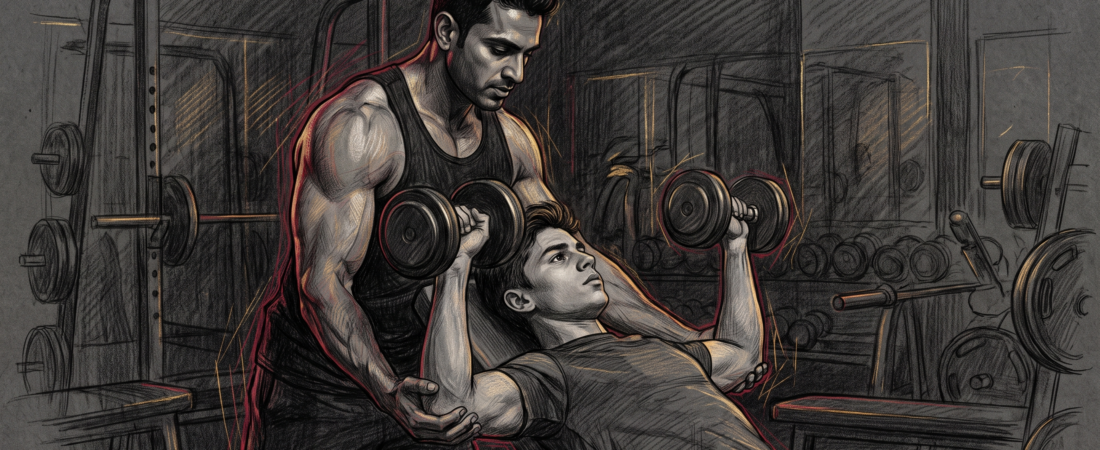
Most people in Delhi who start bodybuilding give it three months before deciding their body does not respond to training. They pick up a routine from a gym wall, follow it for a while, and the mirror barely moves. The body is not the problem here. What almost never gets built is a program designed for one person, plus somebody competent holding the accountability. That is the actual job of a bodybuilding trainer in Delhi: reading your starting point, building a plan around it, and adjusting the plan every week so the work keeps producing results.
What a Bodybuilding Trainer in Delhi Actually Does
A competent bodybuilding coach works on four fronts, and if one of them is missing you should keep looking for someone else.
Programming. You should receive a written, periodized plan rather than a conversation. Most good programs run in 12 to 16 week blocks, alternating a heavier accumulation phase with a lighter deloading phase. Individual sessions have distinct jobs, such as heavy compounds for strength, higher volume for growth, or slower technique work on a lagging lift. A trainer who gives you the same three exercises every week for six months is not programming anything.
Progressive overload tracking. Muscle growth comes from doing marginally more over time. More load, more reps, more working sets, better range of motion, tighter execution. Somebody has to record what you lifted last week and decide what happens this week. Without that log you are improvising, and improvising is the main reason people stall for years.
Nutrition guidance tied to your actual life. Training supplies the stimulus, food supplies the material. Good coaches ask what you really eat rather than reciting a chicken-and-broccoli template. Many Delhi clients eat vegetarian, or eat chicken twice a week at best, so their plans are built around dal, roti, paneer, curd, soy and eggs where the client is comfortable. Getting this right matters more than any supplement, which is why I point most clients at our guide on protein sources for Indian vegetarians before we touch a single training variable.
Recovery coaching. Muscle is assembled while you sleep, not while you lift it. Delhi’s work culture quietly dismantles sleep, and a coach who ignores your travel, your deadlines and your deficit is solving only half the problem.
Bodybuilding Training vs General Fitness Training
This distinction matters more here than clients expect, because the two goals pull in different directions and plenty of coaching never acknowledges it.
General fitness training aims to make you healthier, more mobile and better able to handle whatever your life already asks of you. You measure it by how you move, how you feel and whether you stay injury free. For someone who has not trained in years, it is the correct starting point and nobody should talk you out of it.
Bodybuilding training aims to change the shape of your body through deliberate muscle growth alongside fat loss. You measure it by load on the bar, reps completed at that load, and a side-by-side photo at month six against month zero. The nutrition demands are also different, because bodybuilding work usually asks you to run a deliberate surplus through a build phase and a controlled deficit through a cut phase, tracking your weight week to week instead of simply eating sensibly.
It is also not true that bodybuilding demands six sessions a week, whatever gym marketing implies. Three to four well-designed sessions with genuine progression will build more muscle over a year than six days of effort nobody logged. If you are not sure which one you need, ask a coach how your program would change if the goal were size rather than general health. A serious answer names specific lifts, set counts and diet phases. A vague answer tells you what you suspected.
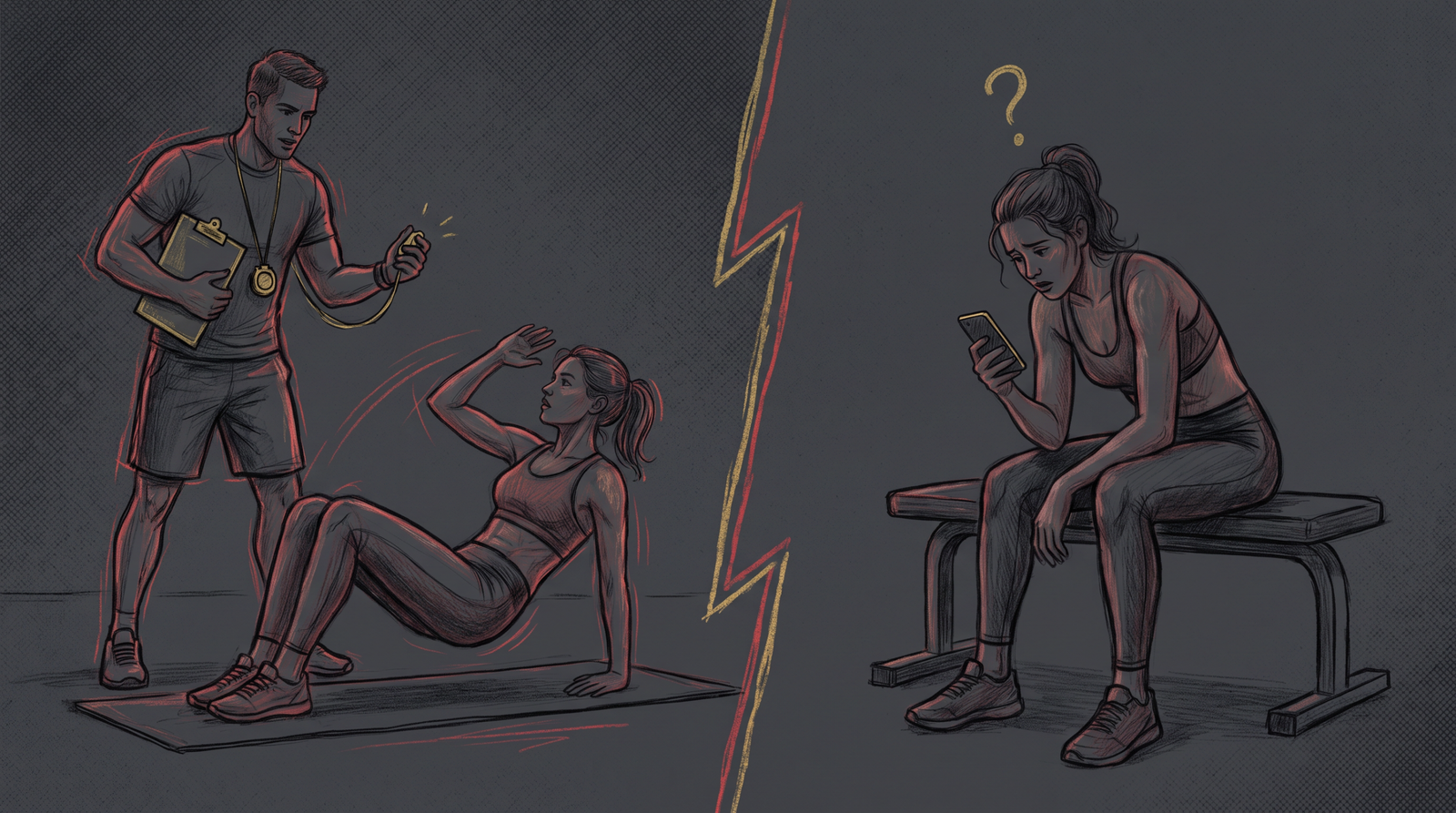
How to Choose a Bodybuilding Trainer in Delhi
Before you pay anyone, work through this list.
- Check the certification, then look past it. NASM, ACE, NSCA and ISSA are all legitimate. Certification is the floor, not the evidence. The evidence is what they have produced for people who looked like you at the start.
- Ask for a written client log. Not a transformation photo, which proves very little. An actual training record, with loads, reps and weeks. If they cannot show one, they are not tracking anything and neither are you.
- Ask what happens when you miss a week. Everybody in Delhi misses weeks. Work trips, a child’s exams, illness, a deadline week. The answer separates a coach with a plan from a coach who restarts your program from zero every time.
- Ask what they will ask you to stop doing. A trainer who never removes something from your program is thinking about your invoice rather than your body.
- Book one session before committing. Watch whether they fix your bar path, whether they count your reps honestly even when you fail one, and whether they set up the station before loading weight.
- Inspect the gym, not just the coach. Ask which equipment you will actually train on, whether it gets maintained, and how crowded the floor is at 7 pm. The best coach in Delhi cannot compensate for a floor packed twelve deep on racks.
- Read the billing terms. Session bundles, cancellation rules, and whether nutrition guidance is included or billed separately. Get the answer in writing before the first payment.
If you want the broader vetting framework rather than the bodybuilding-specific version, my post on how to choose a personal trainer in Delhi walks through the background checks, contract questions and trial-session signs worth confirming.
What a Realistic Bodybuilding Timeline Looks Like
Clients regularly arrive with a deadline. A wedding, a shoot, a cousin’s engagement in seven months, and a specific number of kilos in mind. Being straight with them saves months of frustration.
A beginner starting from zero can realistically add somewhere in the range of 5 to 9 kilos of muscle across a first year of genuine training. The second year moves faster in percentage terms because the movement patterns already exist and the program has a track record to build on. Fat loss is quicker and far more visible in a mirror, which is why body recomposition, building muscle while losing fat, is the most useful approach for most Delhi clients who have never trained before.
Season matters more than clients expect. Summer from April to June suppresses both appetite and training quality, and the July and August humidity makes outdoor work close to useless. Serious lifters in this city train indoors, keep sessions short and intense, and place their progression blocks in the October to March window. A coach who does not understand the seasonal rhythm of Delhi will happily sell you a block that falls apart in June.
If you are training for a sport rather than appearance alone, the programming gets more specialised, and our guide to strength and conditioning coaching in Delhi covers the power and speed side of the work.
What Bodybuilding Training Costs in Delhi
Price is the question people are least comfortable asking, and it is the quickest way to sort serious coaches from the rest.
App-based and templated plans are the cheapest option by a wide margin. For someone with a couple of years of consistent training behind them, a well-built template genuinely works. For a beginner, or for anyone with an injury history or a specific target look, writing your own program is the most expensive option of all, because you will spend a month researching instead of training.
Small group sessions at a Delhi gym cost a fraction of one-to-one rates and suit fairly independent lifters who already know the basic movements. They are not a substitute for the first few months of individual coaching if you have never trained.
One-to-one personal training varies enormously, and the trainer’s reputation matters more than the neighbourhood. Studios around Greater Kailash, New Delhi and affluent parts of South Delhi price higher than the same service in Dwarka, Rohini or Noida, though the spread in quality between individual trainers is far wider than the spread between areas.
Two questions are worth asking every coach. Are sessions time limited, and is anything charged beyond the session itself? And is nutrition guidance included or billed as an extra? The honest answer is that you pay for two things: the programming and the accountability. A coach who delivers both will not be the cheapest quote in your inbox. A coach who delivers neither is not worth a discount.
Eating for Muscle Growth on an Indian Diet
Protein is the lever. For most people aiming at muscle growth, 1.6 to 2.2 grams per kilogram of bodyweight per day covers the requirement, and spreading it across four or five meals works better than cramming most of it into dinner.
On an Indian vegetarian diet that target is achievable without heroics. Paneer, curd, dal, soy chunks, chana, eggs, and a decent portion of protein at every sitting add up quickly. The failure mode is not protein, it is total calories and carbohydrate around training, which is where most plateaus actually happen.
Supplements are the smallest lever and should come last. Creatine monohydrate is the one with genuinely strong evidence and it is cheap. A whey shake helps only if it solves a protein or timing problem you actually have. Everything marketed as a testosterone booster or muscle activator has no credible evidence behind it, and Delhi gyms sell a lot of it.
Five Mistakes That Stall Progress
Training only what you already enjoy. Everyone favours the lifts they are good at. Growth stalls because the back, legs and pulling work get skipped.
Avoiding the barbell lifts entirely. Dumbbells are excellent and easier to learn. But rows, presses and squats remain the highest-return movements for building muscle, and skipping them because they look intimidating caps your ceiling early.
Changing programs every month. A new routine feels productive because everything feels new. Adaptation is where the results come from, and adaptation needs time on the same plan. My guide to squat form covers the technique work that makes those lifts worth sticking with.
Loading the bar on ego. Weight on the bar is a tool, not a scoreboard. Adding weight while the reps collapse and the range of motion shortens is not progression, it is a slower way to get hurt.
Ignoring steps, sleep and the deficit. Muscle is built outside the gym. Delhi clients who fix their sleep and add daily walking frequently out-progress clients who add another session.
If you would rather train with a small group while you build the basics, small group personal training in Delhi is worth a look, and it costs less than one-to-one sessions.
Frequently Asked Questions
How much does a bodybuilding trainer in Delhi cost?
It varies with area and with the coach’s reputation, more than with the workout itself. Small group sessions cost the least, one-to-one coaching sits in the middle, and premium private studios price highest. Ask what is included beyond the session, since nutrition guidance is sometimes billed separately.
How long does it take to build muscle?
Beginners can expect roughly 5 to 9 kilos of muscle over a first year of consistent training. Visible changes in the mirror usually show up in months three to four, while strength gains show up sooner. Recomposition, where fat comes off while muscle goes on, gives the fastest visual change for beginners.
Should a beginner use dumbbells or a barbell?
Both work. Dumbbells are easier to learn and safer around the spine, and they are a fine way to build a beginner’s first six months of muscle. Barbell squats, presses and rows carry higher return once the patterns are solid. A coach who refuses to let you touch a barbell, or who has you face pressing on day one, is telling you something about their own coaching.
Is bodybuilding training safe if I am over 40?
Yes, with the right screening. Get blood pressure and basic cardiac checks cleared, start with moderate loads, and build technique before intensity. Women in their 40s and 50s often train with better consistency than men in the same age group, which shows in the results.
Can I build muscle without a full gym membership?
You can build a large share of your first year of muscle with dumbbells, a bench and a pull-up bar in a home setup. What you cannot fully replicate at home is heavy loading and the supervision that makes heavy loading safe. Plenty of my Delhi clients do a home block and a gym block rather than paying for a full year of membership.
Start Your Bodybuilding Training with Richi Fitness
If you have been following a routine for months without seeing changes, the fix is usually not more effort. It is a program built for your body, your schedule and your food, and someone checking the log when you fall short.
Richi Singh runs Richi Fitness out of Delhi, coaching clients across South Delhi, Dwarka, Noida and Gurugram through one-to-one and small group sessions. You will start with an assessment, get a written 12 week block rather than a printed exercise list, and review progress every fortnight. The first conversation covers your training history, your honest schedule, your food, and what you are actually willing to do for a year. That conversation decides whether coaching is the right answer for you at all, and I will tell you when it is not.
Call or WhatsApp +91-96549-26593 to book an assessment session.