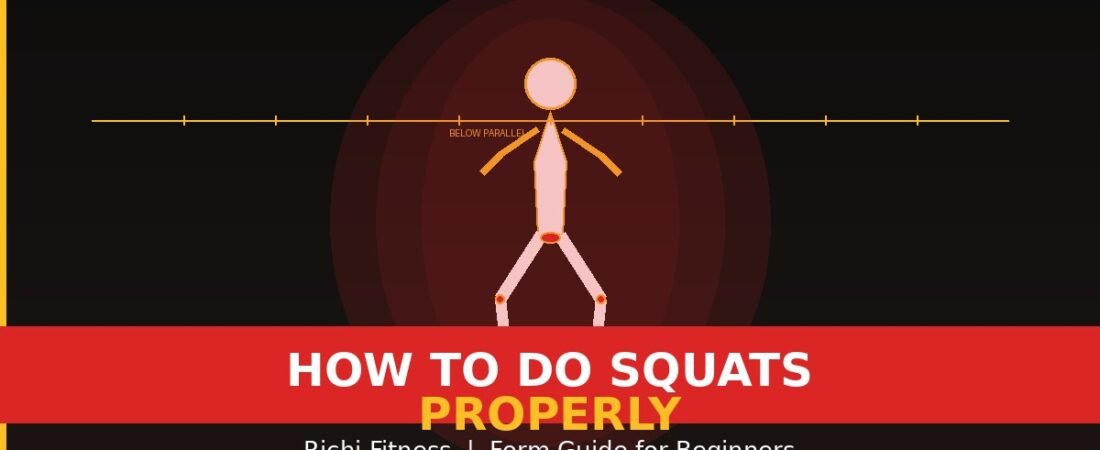
Why Squats Are Non-Negotiable
Squats are a compound exercise, which means they recruit multiple muscle groups at once. When you squat properly, your quadriceps, glutes, hamstrings, core, and even your upper back all work together. That is a lot of output from a single movement.
Compound movements build functional strength. Getting up from a low couch, lifting a bag into an overhead compartment, chasing after a child – all of these rely on the same movement pattern. Training that pattern with load makes everyday tasks easier.
Squats also build serious lower body muscle. Your quads do most of the pushing work. Your glutes handle hip extension at the top. Your hamstrings and adductors keep everything stable. For people focused on weight loss, squats deserve a place in your program. They tax large muscle groups, meaning more calories burned per rep. Combined with a solid nutrition plan, the results follow. Our guide on weight loss training in Delhi covers the full approach.
The Perfect Squat: Step-by-Step
Let me walk you through the squat from top to bottom. This applies whether you are doing bodyweight squats or holding a barbell.
Stance and foot position
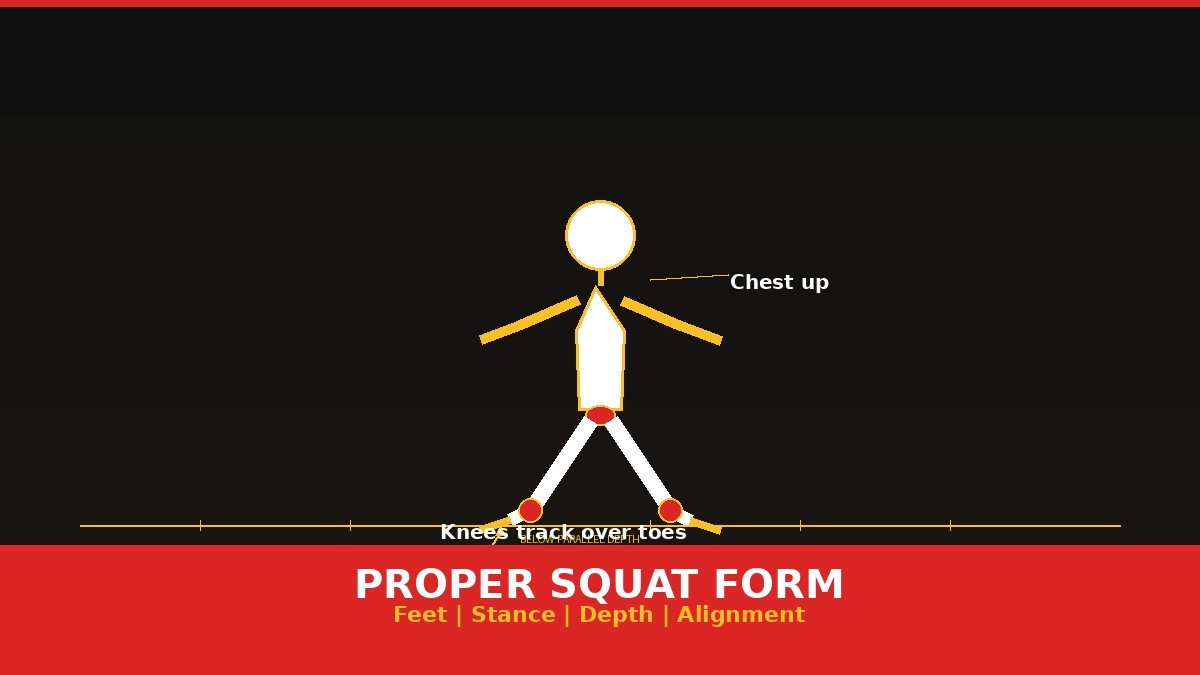
Start with your feet about shoulder-width apart. Some people with wider hips need a slightly wider stance. Others feel more stable a touch narrower. Find what lets you squat deep without your lower back rounding.
Your toes should point outward 15 to 30 degrees. Your feet do not need to be perfectly parallel. Forcing them straight ahead often causes the knees to cave in. Let your toes follow your hip sockets and keep your knees tracking over your toes.
Upper body setup
Before you move, set your chest. Pull your shoulder blades back and down. Lift your chest. Keep your neck neutral by looking at a spot on the floor about 3 to 4 meters ahead – not up at the ceiling and not down at your feet.
For bodyweight squats, extend your arms straight out in front of you or keep them crossed over your chest. Your arms stay in the same position throughout.
For barbell back squats, the bar sits across your upper back, not your neck. Grip the bar just outside your shoulders. Pull the bar down into your upper back like you are trying to bend it. This creates tension that keeps your torso rigid.
The descent
Initiate by pushing your hips back first, as if closing a car door with your rear end. This sends your hips back before your knees bend much, keeping your torso from falling forward.
As your hips move back, your knees bend naturally. Keep them tracking over your toes. Your weight should stay in the middle of your foot and heel, not forward onto your toes.
Depth
Squat until your hip crease is clearly below your knee, called “below parallel.” This range of motion fully engages your glutes and quads. Stopping above parallel turns your squat into a partial movement.
The ascent
Drive through your entire foot, pushing especially through your heels. Keep your chest up and core braced. Do not let your lower back round at the bottom. Exhale as you stand back up and finish with your hips fully extended.
Common Squat Mistakes
I see these five mistakes more than any others at the gym. Fixing even two of them will transform your squat.
1. Knees caving inward
This is the most common mistake and the most likely to cause injury over time. When your knees cave in, the meniscus and ligaments take on stress they were not designed to handle. Push your knees outward consciously as you squat. Think about spreading the floor with your feet. Strengthening your glute medius with lateral band work helps long-term.
2. Heels lifting off the ground
When your heels come up, you lose your stable base. Now you are balancing on your toes with force going through your knees and lower back. Tight ankles are usually the cause. Flat-soled shoes help. So does driving your heels into the ground on every rep. Ankle mobility drills before your workout address this permanently.
3. Not hitting depth
Partial squats miss glute activation and reinforce a limited range of motion. If you cannot hit depth with good form, your ankle or hip mobility needs work, or you are using too much weight. Drop the load, use a box squat to practice depth, and build up. This is what separates beginners from people who train properly.
4. Rounding the lower back
A rounded back under load causes injury. It usually happens when you rush the descent, do not brace your core, or go deeper than your current mobility allows. Keep your chest up, grip the floor with your feet, and slow down. If your back starts to round, stop there and work on mobility before going deeper.
5. Leaning too far forward
Some forward lean is normal with a barbell. But if your torso is at a 45-degree angle, you are doing a good morning with a squat bar. Keep your chest up and push your hips back first. A more upright torso keeps tension on your legs, not your lower back.
6. Looking down at your feet
Your eyes lead your torso. If you look down throughout the squat, your upper back rounds and your chest drops. Pick a spot on the wall ahead at eye level and keep your gaze there.
Bodyweight Squats vs Goblet Squats vs Barbell Back Squats
Not all squats are the same. Here is how to think about progression.
Bodyweight squats
Start here if you are new. No equipment, no excuses. Bodyweight squats build the movement pattern – stance, depth, knee tracking, chest position. Three sets of 15 to 20 reps, slow and controlled. If you cannot hit depth without your back rounding, use a box behind you to squat to. That builds mobility and confidence at the same time.
Goblet squats
Hold a dumbbell or kettlebell at your chest with both hands. The weight pulls your torso upright, making it harder to lean forward. Goblet squats reinforce good mechanics under load. Three to four sets of 10 to 12 reps. Most people spend four to eight weeks here before moving to a barbell.
Barbell back squats
The bar sits across your upper back. Your stance is usually slightly narrower than bodywidth. The load is now significant, and so is the risk if your form breaks. Before you barbell squat, you should be able to do 3 sets of 12 goblet squats with good form at a challenging weight. If you want a structured program, our strength and conditioning coaching in Delhi explains how we progress clients from beginner to intermediate.
What Shoes Are Best for Squats?
Flat-soled, stable shoes are the short answer. Cushioned running shoes are designed to absorb shock during a run. When you squat, you want force transfer from the ground through your feet into your torso, not absorbed shock. A soft sole destabilizes that transfer – your heel wobbles, your knees compensate, and your lower back takes on extra work.
Flat-soled shoes, Converse, wrestling shoes, or dedicated squat shoes with a slight heel lift all give you the stable base you need. For Indian gym-goers specifically, I see people squatting in heavily cushioned running shoes constantly. The shoe was designed for a completely different activity. Swap to something with a firm sole for squat day and you will feel the difference in stability and depth immediately.
For more on equipment and training setup, our personal fitness training services page covers how we set beginners up for success.
Will 20 Squats a Day Make a Difference?
The honest answer: some difference, but not the kind most people are hoping for.
Doing 20 bodyweight squats daily keeps your legs active and burns calories. For someone completely sedentary, it is a step in the right direction.
But the body adapts fast. Within a few weeks, 20 bodyweight squats becomes trivially easy. Your muscles stop responding to the stimulus. That is the plateau.
What actually makes a difference is progressive overload. A program that adds weight to your squats every week will transform your legs in months. Twenty unloaded squats a day with no progression will not. If 20 squats feels like work, start there – but treat it as a beginning, not a strategy.
Squat Form for Indian Body Types
Working with Indian clients, I notice two patterns that come up constantly.
Ankle mobility issues
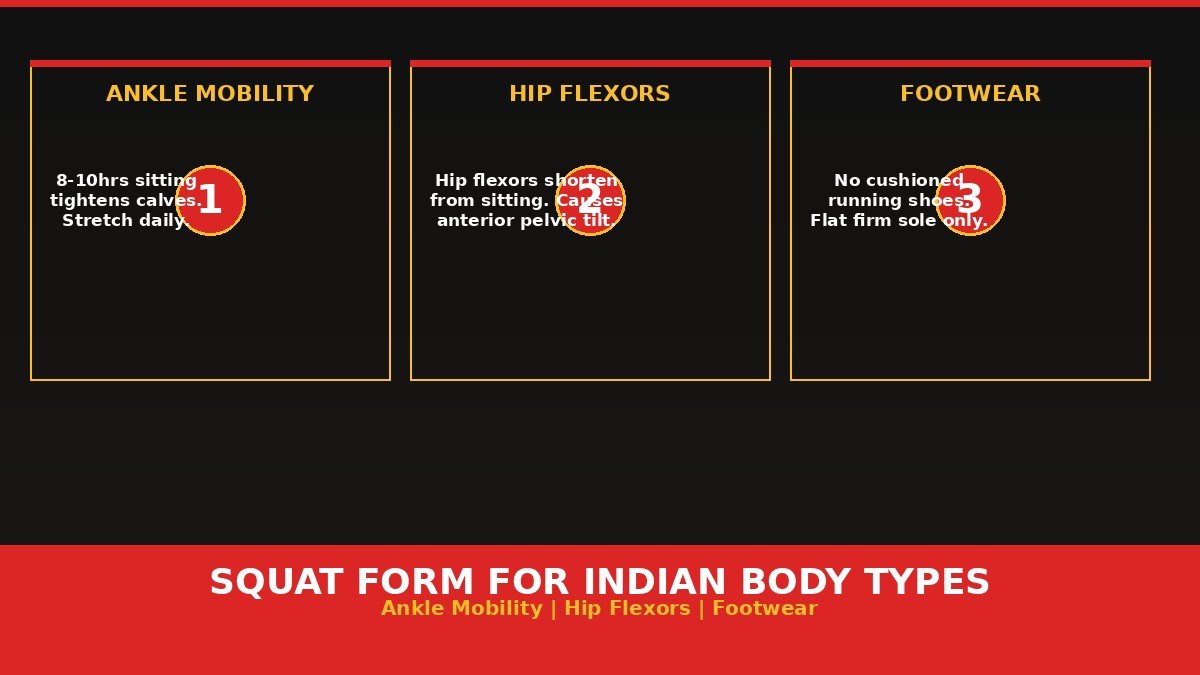
Many people cannot get their knees past their toes when squatting deep, not from a structural problem but from limited ankle dorsiflexion. Sitting at a desk for 8 to 10 hours keeps the calves in a shortened position. Over months, that tightness limits how far the knee can travel forward. Spend 2 to 3 minutes before your workout doing calf stretches against a wall. Over time, this opens ankle range and lets you squat deeper with a more upright torso.
Hip flexor tightness from desk work
Sitting puts your hip flexors in a chronically shortened state. Tight hip flexors pull your pelvis into an anterior tilt, making it harder to keep your torso upright. A kneeling hip flexor stretch – one knee on the floor, the other foot in front, pushing hips forward gently for 30 seconds per side – helps. Combine it with glute activation work like glute bridges and your squat depth improves within weeks.
Footwear choices
If you squat in cushioned running shoes, change your shoes before you worry about anything else. The difference in stability is immediate. You do not need expensive squat shoes – a flat, firm-soled sneaker works fine.
Frequently Asked Questions
What shoes are best for squats?
Flat-soled shoes with minimal cushioning are ideal. Converse, wrestling shoes, or dedicated squat shoes with a slight heel lift all work. Avoid cushioned running shoes on squat day – the absorbed shock destabilizes your base and shifts stress to your knees and lower back. Barefoot works if your gym floor is clean.
Are squats a compound exercise?
Yes. Compound exercises recruit multiple muscle groups and joints at the same time. Squats involve the hips, knees, and ankles working together while your quadriceps, glutes, hamstrings, adductors, and core all fire at once. That multi-joint engagement makes them far more efficient for building strength and burning calories than isolation exercises.
Do squats help you lose weight?
Squats can help with weight loss, but they are not a standalone solution. Because squats tax large muscle groups, they burn more calories per rep than smaller isolation movements. Combined with a calorie-controlled diet and a full program, squats contribute to fat loss while preserving muscle. The transformation happens across your entire weekly routine, not from squats alone.
How often should I squat per week?
For beginners, 2 to 3 sessions per week is ideal. This gives your legs recovery time while building the movement pattern. As you get stronger, some people move to 3 to 4 sessions. If your legs are still sore, give them another day. Recovery is when the adaptation happens.
Should my knees go past my toes when squatting?
Yes, and this is normal. The idea that knees past your toes is inherently dangerous is a myth. As long as your knees track in line with your toes and you are not in pain, having your knees travel forward is biomechanically fine. Trying to prevent it by forcing your torso further forward creates more problems than it solves.
The Bottom Line
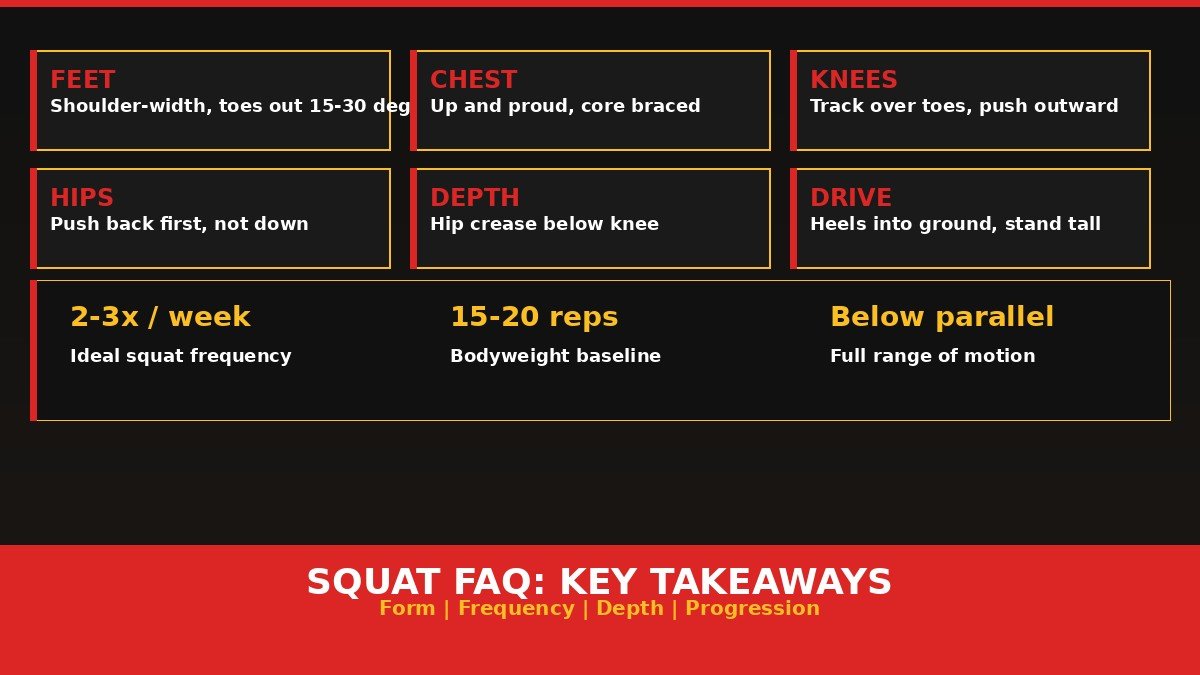
Proper squat form is not complicated, but it is specific. Feet shoulder-width apart, toes slightly turned out, hips back first, chest up, knees tracking over toes, depth below parallel, drive through the heels on the way up. Get those six things right consistently and you are squatting better than 80 percent of people in most gyms.
Start with bodyweight. Master the movement pattern before you add load. Film yourself from the side and back – what you feel and what you look like are often different things. Fix the form errors you can see before they become habits.
If you are in Delhi and want hands-on coaching to lock in your squat form, call or WhatsApp to book a free consultation session with Richi Singh. Whether you are training for strength, fat loss, or sports performance, the squat is the foundation – and we will make sure you do it right from the start.
Related: Best Workout Split for Beginners: What A
Related: Sports Fitness Coach Delhi: Complete Gui
Related: How to Do Squats Properly: Form Guide fo