Personal Fitness Training Services Delhi | What to Expect
·
5 min read
·
Richi Singh
What Counts as a Personal Fitness Training Service in Delhi
When you search for personal fitness training services delhi, you will find a wide range of options. Some trainers offer only workout programming. Others provide full-service support that includes nutrition planning, recovery guidance, mobility work, and accountability check-ins. The difference matters. A service that covers nutr
ition and recovery alongside your sessions will produce better results than one that simply supervises sets.
In Delhi, the fitness service landscape varies by neighborhood. Trainers operating out of gyms in Saket and Vasant Kunj tend to offer structured programs with access to commercial equipment.
The Main Types of Training Services Available
One-on-One Personal Training
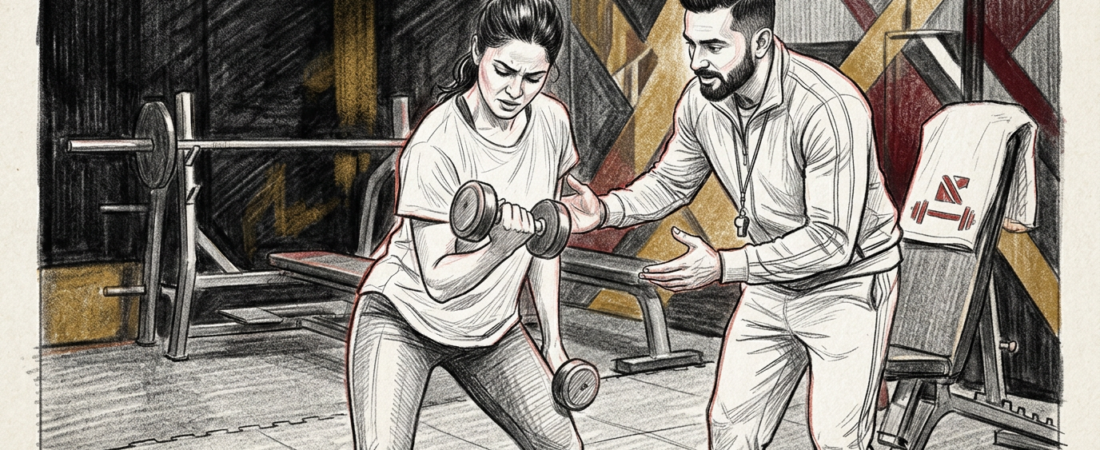
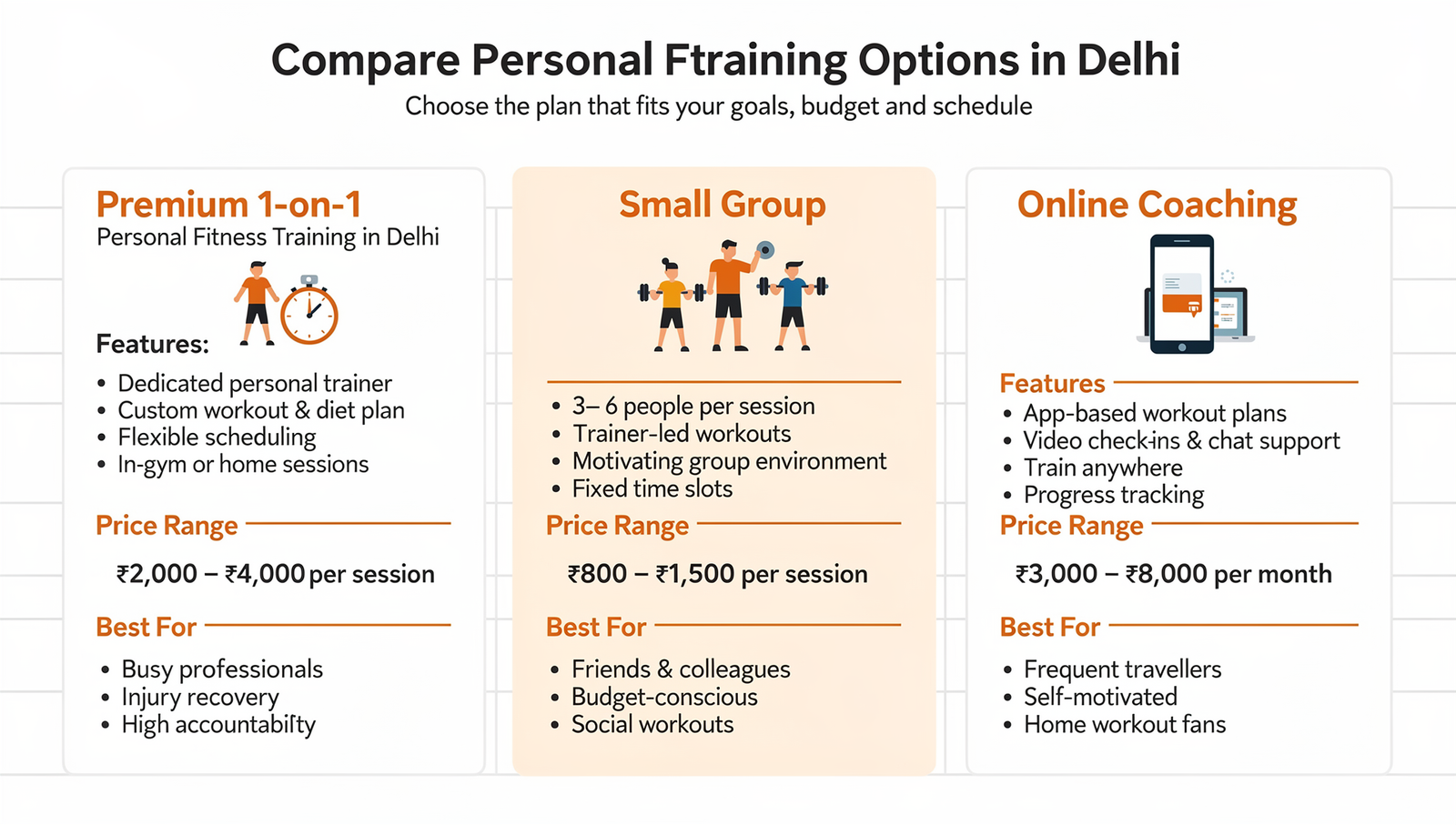
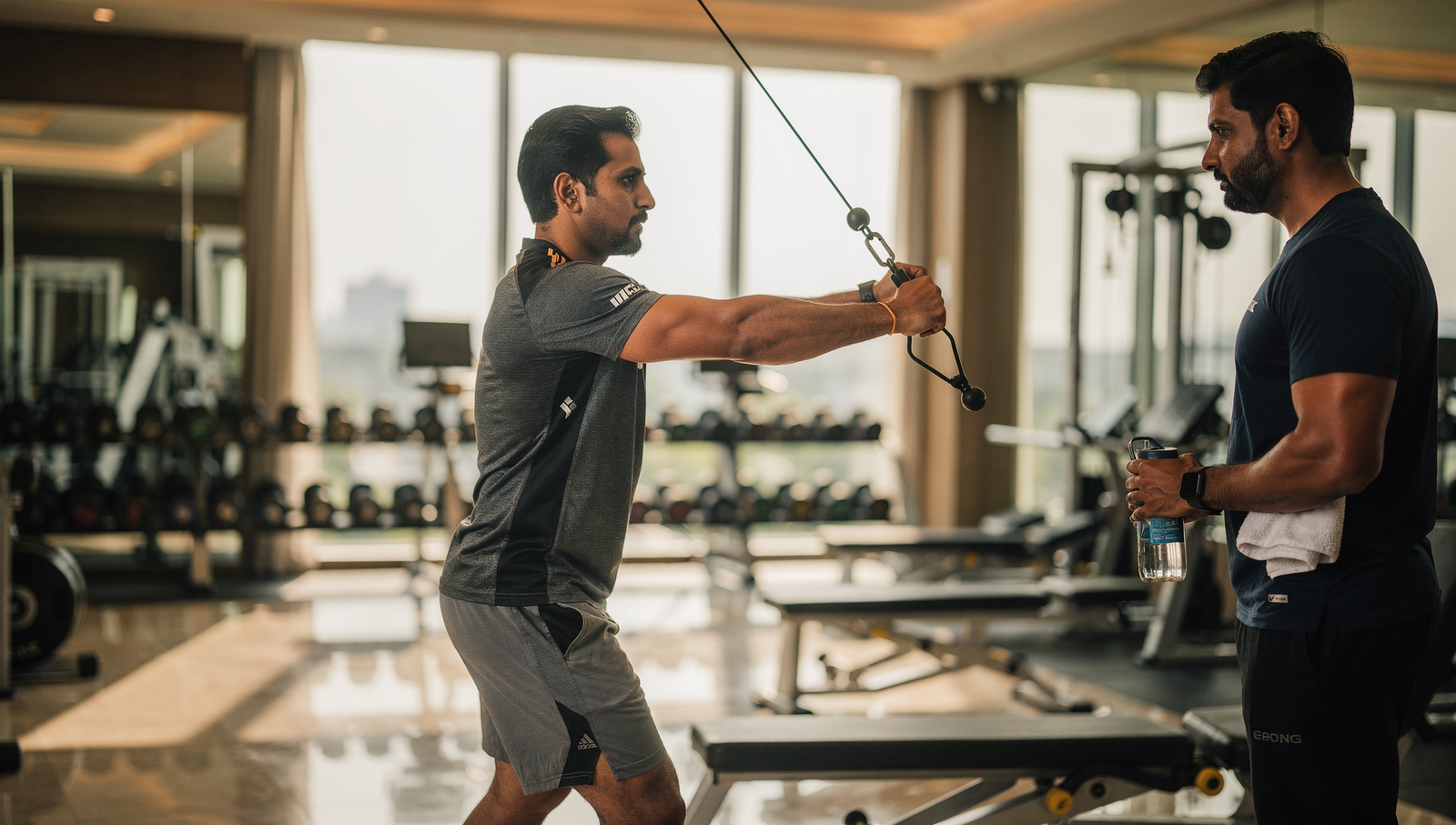
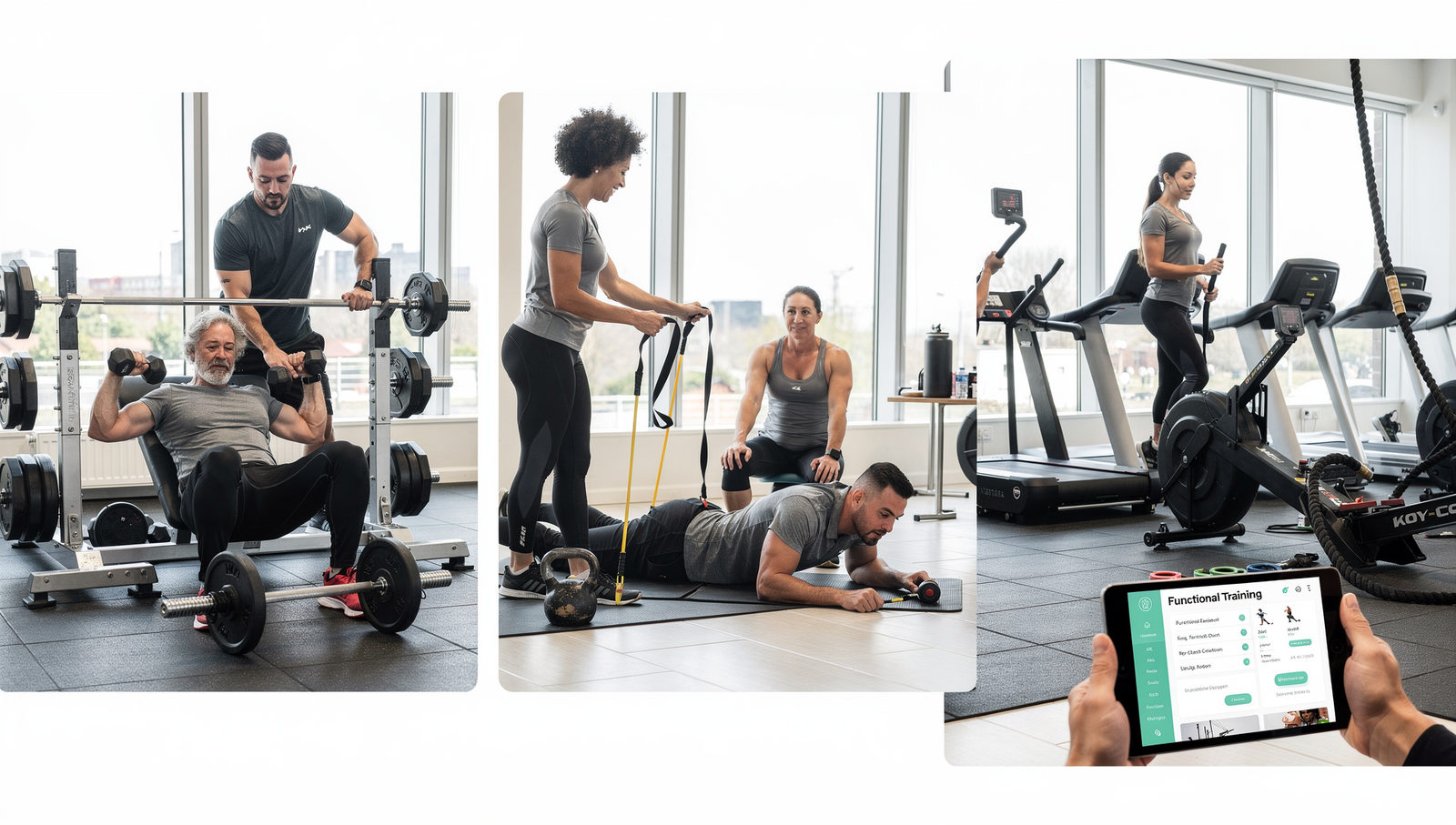
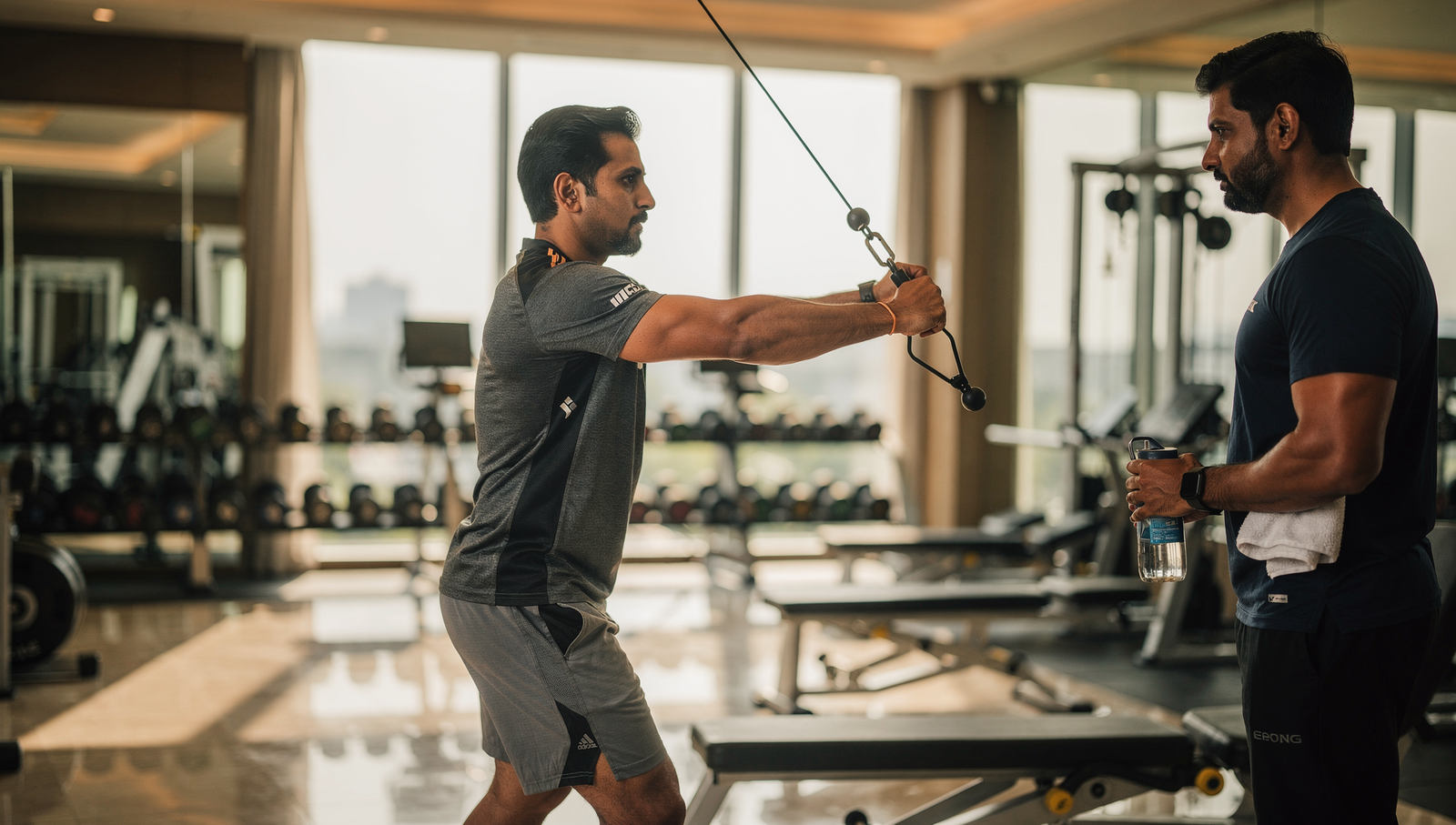
One-on-one training puts the full session focus on you. Your trainer corrects your form in real time, adjusts weights and intensity as you fatigue, and can modify exercises on the spot if something bothers a joint. This format works well if you are recovering from an injury, training for a specific event, or simply prefer close attention. The trade-off is cost. One-on-one sessions in Delhi typically run between 800 and 3,000 rupees per session, depending on the trainer’s credentials and the gym or location. If you want to understand how to evaluate trainer quality before you book, read our guide on how to choose a personal trainer in Delhi.
Small Group Training
Small group sessions usually involve three to five people with similar fitness goals. The reduced participant count keeps the cost lower than one-on-one training while still giving you more attention than a large class. Group members often push each other in a healthy way, which can improve consistency. Many trainers in Rajouri Garden and Saket run small group packages that include weekly programming and periodic reassessments. This format is worth considering if you have a workout partner or a colleague with similar availability.
Online Coaching
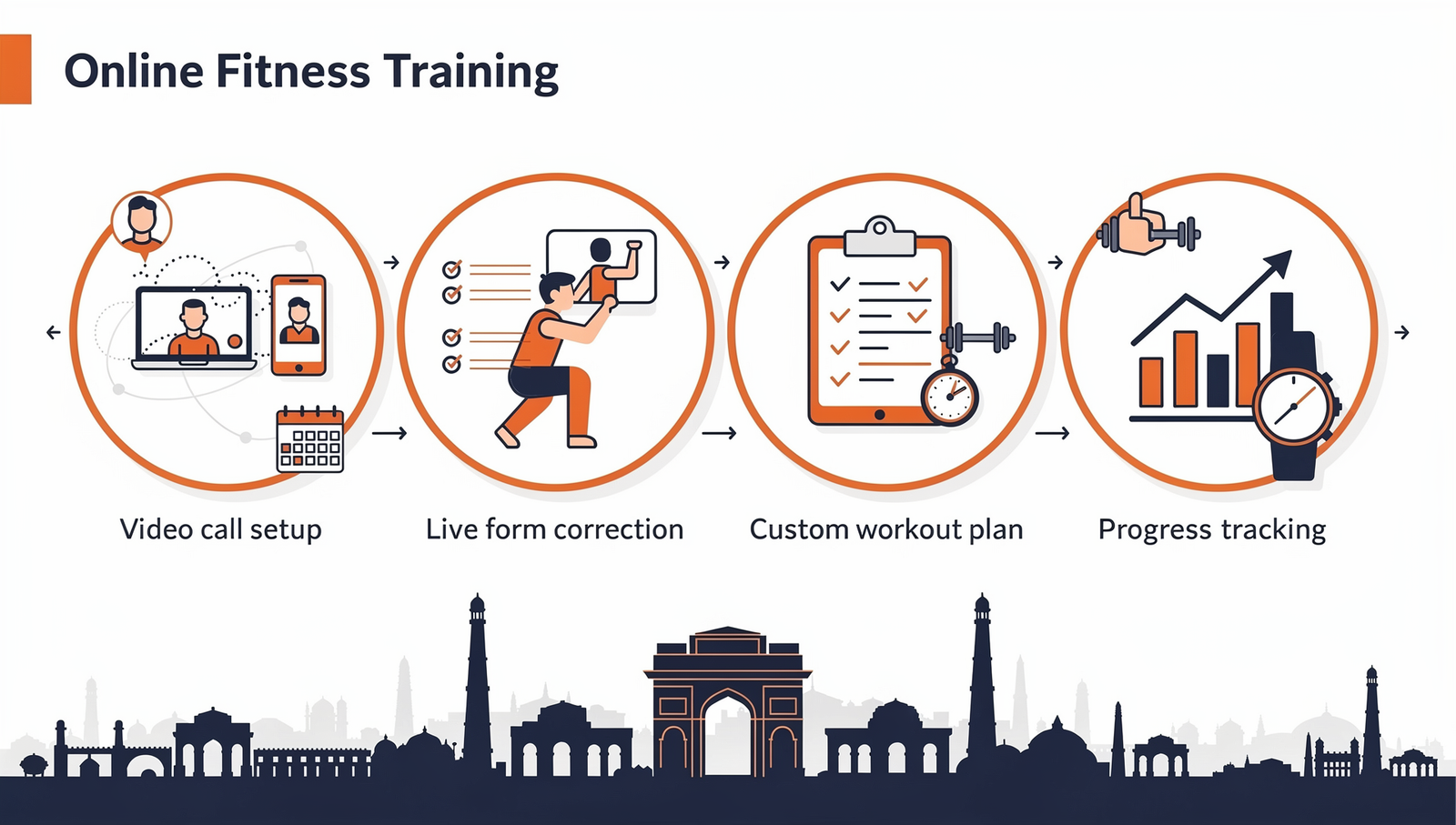
Online coaching removes the need for a shared physical space. You receive a customized program, video demonstrations of exercises, and often weekly check-ins via call or message. Some services include form review through recorded clips. This option is practical if your schedule is unpredictable, if you travel frequently, or if you cannot find a local trainer whose style suits you. The main limitation is the lack of real-time correction during workouts, which means you need to be honest about your movement limitations and willing to ask questions.
Home Visit Training
A home-visit trainer comes to your location with the equipment needed for your program. This removes commute time from your routine and creates a comfortable environment if you feel self-conscious in a public gym. Trainers who offer home visits in Dwarka and Rajouri Garden typically tailor programs to the space available, using resistance bands, dumbbells, and bodyweight movements when a full rack is not practical. Pricing is usually higher per session due to travel time, but many trainers offer monthly packages that bring the per-session cost down.
Corporate Wellness Programs
Corporate programs bring structured fitness sessions into the workplace during lunch breaks or early mornings. Companies in Vasant Kunj and Saket that invest in employee wellness report b
etter energy levels and fewer stress-related absences. If your employer offers this benefit, use it. Even two sessions per week on company time builds consistency that is hard to maintain on your own.
border-radius:8px;” />Fitness training image 1
How to Evaluate Service Listings Honestly
Most of what appears when you search for personal fitness training services in Delhi comes from directory platforms. These listings show ratings, reviews, and price ranges, but they do not verify whether the trainer’s approach matches your goals. A five-star rating from someone training for weight loss does not tell you whether that trainer can help you prepare for a cricket season.
Use directories to shortlist candidates, then evaluate each one against the criteria in this guide. Look for
evidence of specialization, ask about client outcomes similar to your starting point, and request a trial session before committing to a package.
How to Evaluate Service Listings Honestly
Most results for personal fitness training services in Delhi come from directory platforms. These show ratings, reviews, and price ranges, but they do not verify whether a trainer’s approach matches your goals. A five-star rating from someone training for weight loss does not tell you whether that trainer can help you prepare for a cricket season.
Use directories to shortlist candidates, then evaluate each one against the criteria in this guide. Look for evidence of specialization, ask about client outcomes similar to your starting point, and request a trial session before committing to a package.
Fitness training image 2
How Delhi Pricing Typically Works
Pricing in Delhi depends on three main factors: the trainer’s certification and experience, the session format, and the location. One-on-one sessions with certified trainers at established gyms near Jawaharlal Nehru Stadium cost more than sessions with newer trainers at smaller facilities in Dwarka. Package deals almost always reduce the per-session cost. A 12-session package typically cuts your per-visit cost by 20 to 30 percent.
Some trainers also charge a program-design fee on top of session fees. This one-time fee covers the initial assessment and the customized plan they build for you. Ask about this upfront so it does not appear as a surprise on your first invoice. For athletes with performance-specific needs, our article on sports performance training in Delhi breaks down how performance-focused coaching differs from general fitness coaching and what that means for pricing.
Average Delhi Session Pricing by Format:
One-on-one: INR 800 – 3,000 per session
Small group: INR 400 – 1,200 per session
Online coaching: INR 3,000 – 15,000 per month
Home visit: INR 1,200 – 3,500 per session
Corporate: INR 500 – 1,500 per employee per session
What Your First Session Actually Looks Like
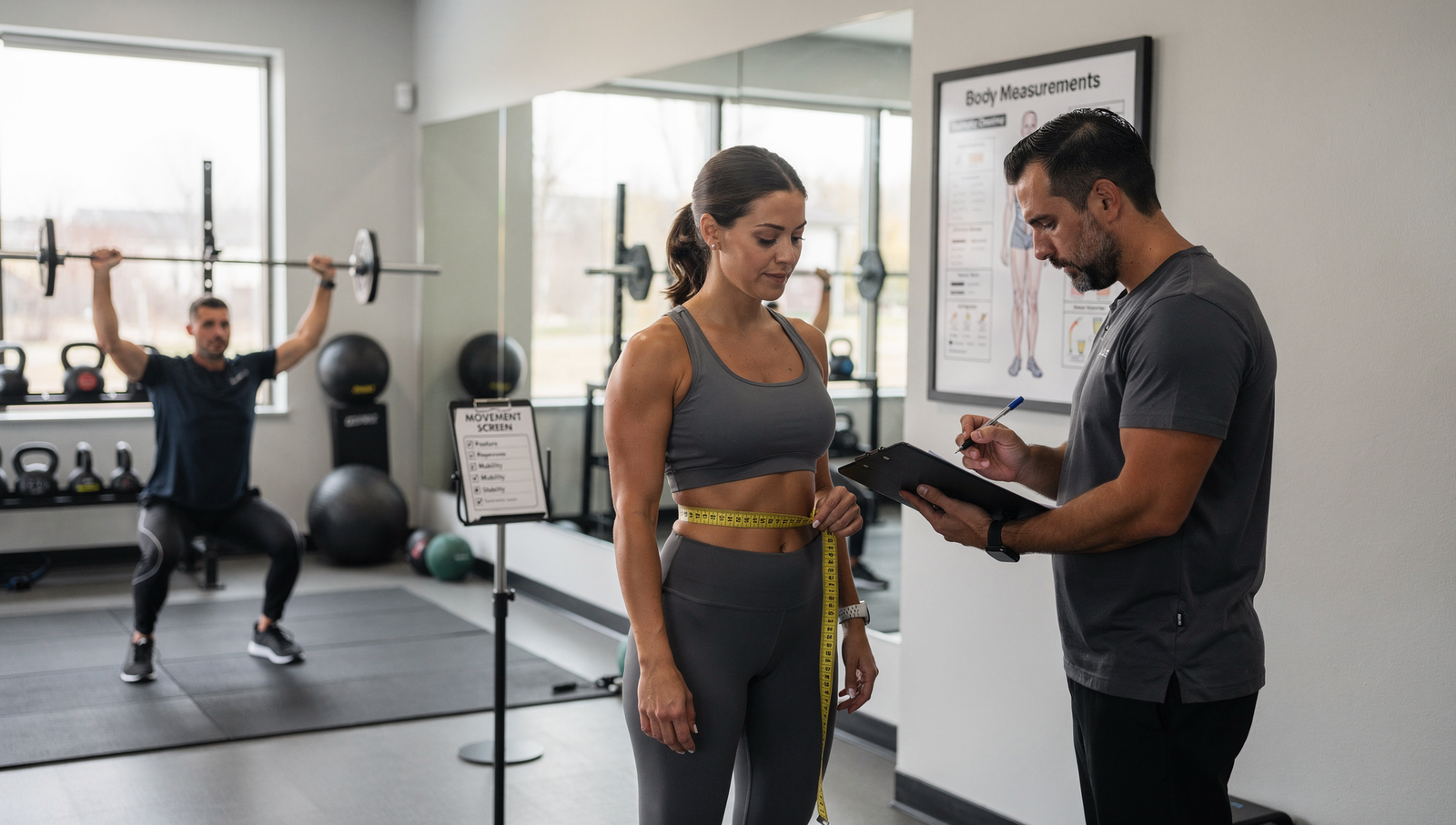
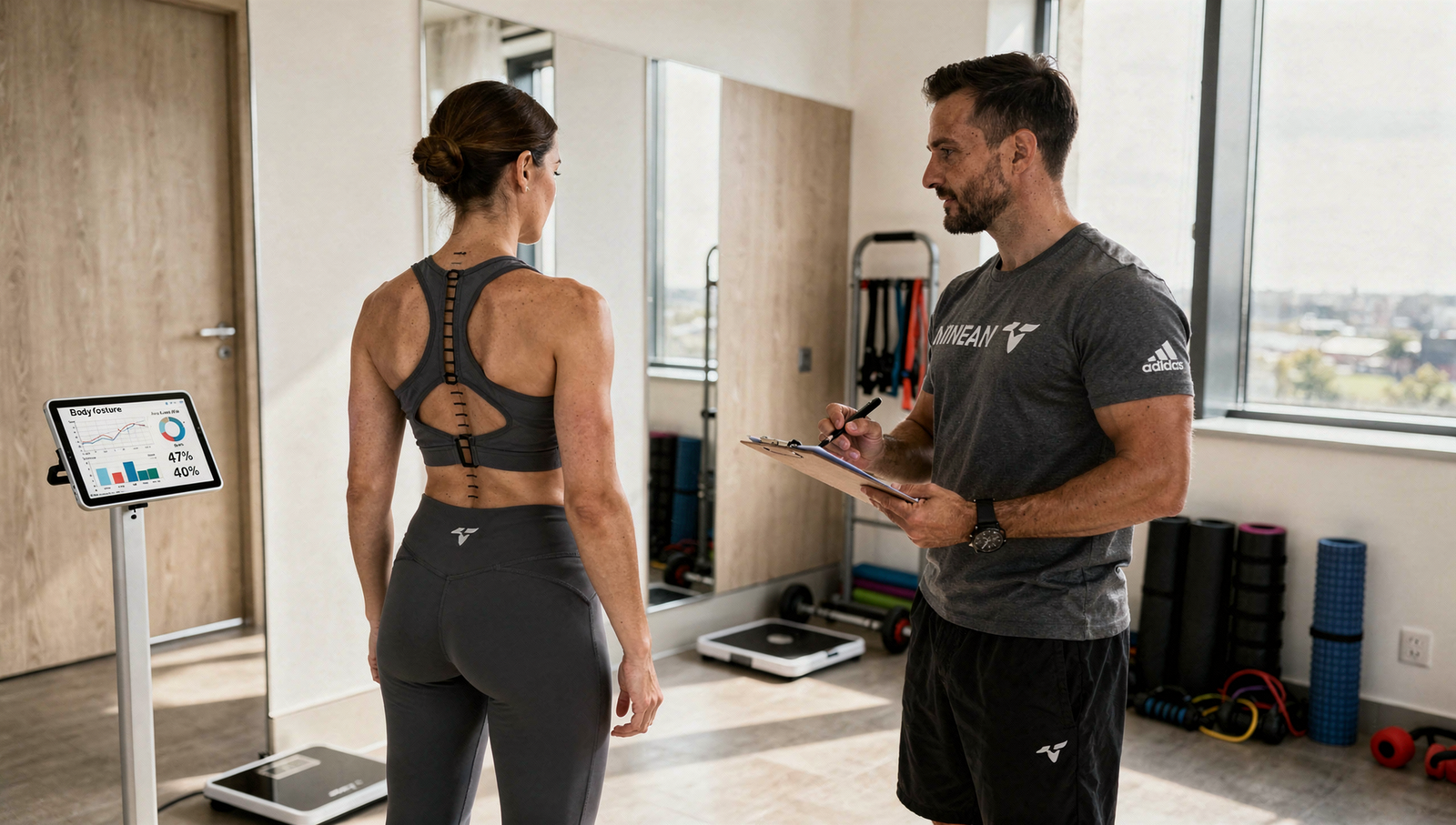
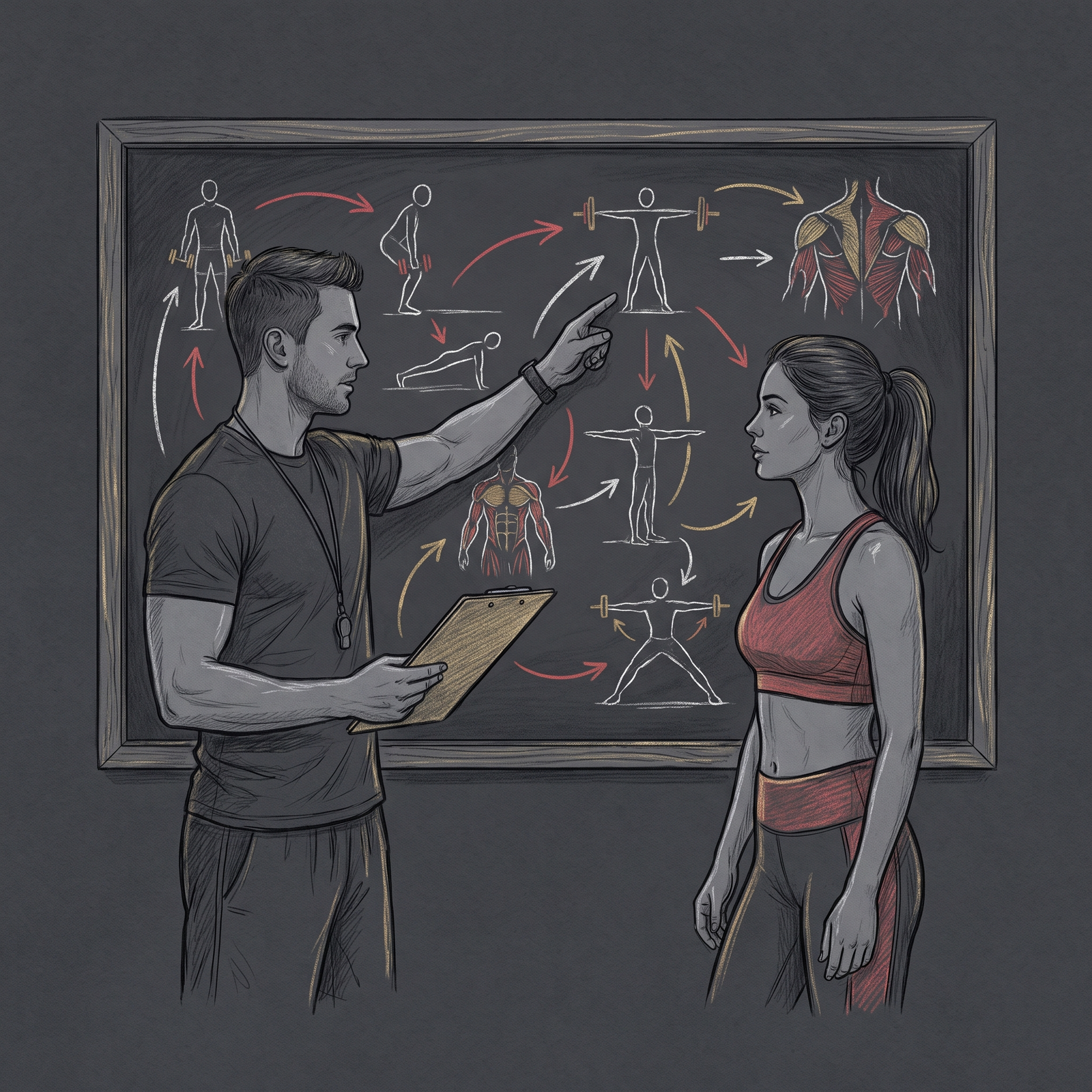
The first session is rarely a hard workout. Most trainers start with an assessment. They will ask about your training history, current activity level, injuries, and what you want to achieve. They will likely observe how you move through basic exercises like squats, lunges, and overhead reaches. This is not a test you need to pass. It gives them the information they need to build a program that does not injure you.
Expect the trainer to explain their approach and ask what has and has not worked for you in the past. A good trainer listens more than they talk during this session. By the end of the first meeting, you should understand the basic structure of your program, what equipment you need, and what they expect from you between sessions. If you leave confused or feeling like they did not listen, that is useful information. Cricketers and other athletes looking for specialized conditioning can learn more about what a performance-focused initial assessment involves in our guide to cricket fitness coaching in Delhi.
The best training service is not the one with the flashiest marketing. It is the one whose communication style matches yours, whose schedule aligns with your week, and whose approach to progress tracking feels transparent.
Fitness training image 3
How to Match a Service Type to Your Goals
Your goal determines the format that makes sense. If you are training for a marathon or a cricket season, you need a service that structures your weekly load around those demands. Sport-specific programming near the D.D.C.A. complex is built for exactly this scenario. If you want to lose weight and build general strength, one-on-one training or a small group with a nutrition component will serve you well. If you travel frequently or keep odd hours, online coaching gives you a program you can execute anywhere.
Do not choose a service type based on what a friend recommends without checking whether their goal matches yours. A small group class that works for someone training for aesthetics may not suit someone managing a back injury. Be honest about your starting point and your constraints when you discuss options with a trainer.
Questions to Ask Before Booking Any Service
Asking the right questions before you commit protects your time and money. Start with these:
What certifications do you hold, and do you have experience with clients who have my specific goals?
What does a typical week of programming look like, and how do you adjust it over time?
How do you track progress, and what metrics will we review together?
What is your cancellation policy, and how much notice do you need?
Do you offer nutrition guidance, or do you refer clients to a dietitian?
What happens if I need to pause sessions due to travel or work?
A trainer who answers these questions clearly and comfortably is a good sign. One who gives vague answers or avoids specific questions warrants more research before you sign anything.
Red Flags in Service Providers
Some warning signs are easy to miss during an initial, friendly conversation. Watch out for trainers who promise dramatic body transformations in four to six weeks without effort. Real change requires consistency, and no professional can guarantee rapid results. Be cautious of trainers who recommend expensive supplements as a requirement rather than an optional addition, or who cannot explain why a particular exercise is in your program.
If a trainer dismisses your injury history or refuses to modify movements after you express discomfort, that is a hard stop. You need someone who takes your physical limits seriously. Similarly, a service that makes it difficult to reach your trainer between sessions, or that pressures you into a long-term contract on day one, is not operating in your best interest.
Fitness training image 4
Getting Started With the Right Fit
Start by identifying your non-negotiable requirements. If you can only train before 7 AM, eliminate trainers who do not offer that window. If you have a knee issue, prioritize trainers with rehabilitation experience. Once your list is clear, reach out to two or three trainers for a brief call or an initial consultation. Compare how they communicate, how they structure their answers, and whether their approach genuinely aligns with what you described.
Book a paid trial session before committing to a monthly package. A single session tells you more about trainer compatibility than any website or review. Pay attention to how the trainer explains movements, how they respond to feedback, and whether you feel comfortable being guided by them. Trust that signal. If the session feels off, you are not wasting money. You are saving yourself from a longer, more frustrating commitment.
Frequently Asked Questions
How much does a personal fitness trainer cost in Delhi?
Session rates vary by format and location. One-on-one sessions range from 800 to 3,000 rupees. Small group sessions cost between 400 and 1,200 rupees per person. Online coaching packages typically start around 3,000 rupees per month. Home visits and corporate sessions sit at the higher end of these ranges due to travel and customization factors.
Online coaching can be very effective if you are self-disciplined and communicate honestly about your workouts. The main difference from in-person training is the lack of real-time form correction. If you can record your sessions and share clips with your coach, or if you have a solid baseline of movement literacy, online coaching is a practical option. It works best for people with unpredictable schedules or limited access to local trainers they trust.
How do I know if a trainer is qualified?
Look for certifications from recognized organizations such as ACE, NASM, ISSA, or REPs India. Ask about continuing education and specialization. A trainer who regularly updates their skills and holds specific credentials in areas relevant to your goal, such as prehab or sport conditioning, is a stronger choice than one whose last certification was several years ago. Ask them directly what additional education they have completed in the last two years.
What should I expect during my first personal training session?
Your first session is primarily an assessment. The trainer will ask about your health history, injuries, current activity level, and goals. They will observe how you move through basic patterns like the squat, lunge, and overhead press. They may also check your flexibility and basic cardio capacity. Expect a conversation rather than an exhausting workout. By the end of the session, you should have a clear picture of what your first full training block will look like.
How many sessions per week should I book?
For general fitness goals, two to three sessions per week is enough for most people. This gives you enough stimulus to improve while leaving recovery time between sessions. If you are training for a sport or a specific event, three to five sessions per week may be appropriate, especially if your trainer distributes intensity across the week. Avoid jumping straight into five or six sessions if you are returning to training after a break. Build gradually and let your body adapt.
Can I combine home visits with gym sessions?
Yes, many trainers in Delhi offer flexible arrangements. You might do two home-visit sessions per week for strength work and one gym session for access to equipment like racks, cable machines, or cardio setups. This hybrid approach is practical if you have a gym nearby but value the convenience of home sessions on busier days. Discuss this option during your initial consultation, as some trainers charge a premium for mixing formats.
With over 12 years of coaching experience, Richi Singh specializes in weight management,
sports conditioning, and corporate wellness. He has trained celebrities, athletes, and everyday clients
across Delhi, combining assessment-driven programming with nutrition guidance for lasting results.
How do I choose the right fitness trainer in Delhi?
Look for verified certifications like CSCS, ISSA, or NASM, check client testimonials, and make sure the trainer understands your specific goals. Richi Singh recommends asking about their experience with clients who have similar needs to yours before committing to a program.
How long before I see results from personal training?
Most clients notice improved energy and better sleep within two weeks. Visible changes in body composition typically show around the four to six week mark when training is consistent and nutrition is aligned with the program.
How many training sessions per week do I need?
For most clients in Delhi, three to four sessions per week delivers the best results. This allows enough stimulus for adaptation while giving your body time to recover. Richi designs programs that fit around work schedules and Delhi’s climate.
Can personal training help with specific health conditions?
A qualified trainer can adapt programs for thyroid issues, PCOD, back pain, and other common conditions. Always disclose medical conditions during your first consultation. Richi works in coordination with your doctor to build safe, effective programming.
About the Author
Richi Singh — Certified Personal Trainer, Delhi
With over 12 years of coaching experience, Richi Singh specializes in weight management, sports conditioning, and corporate wellness. He has trained celebrities, athletes, and everyday clients across Delhi, combining assessment-driven programming with nutrition guidance for lasting results.