
Why Online Training Is Growing in Delhi
Delhi commuters spend an average of two and a half hours in traffic every day. That is time that vanishes before your workout begins.
The growth is not just about convenience. Delhi weather plays a major role.
Working professionals in Saket, Vasant Kunj, Connaught Place, and Nehru Place cannot always commit to fixed gym hours. They need programming that fits around meetings and deadlines.
Residential apartments also have limited space. Online trainers build programs around compact equipment and bodyweight movements.
What an Online Fitness Trainer Actually Provides
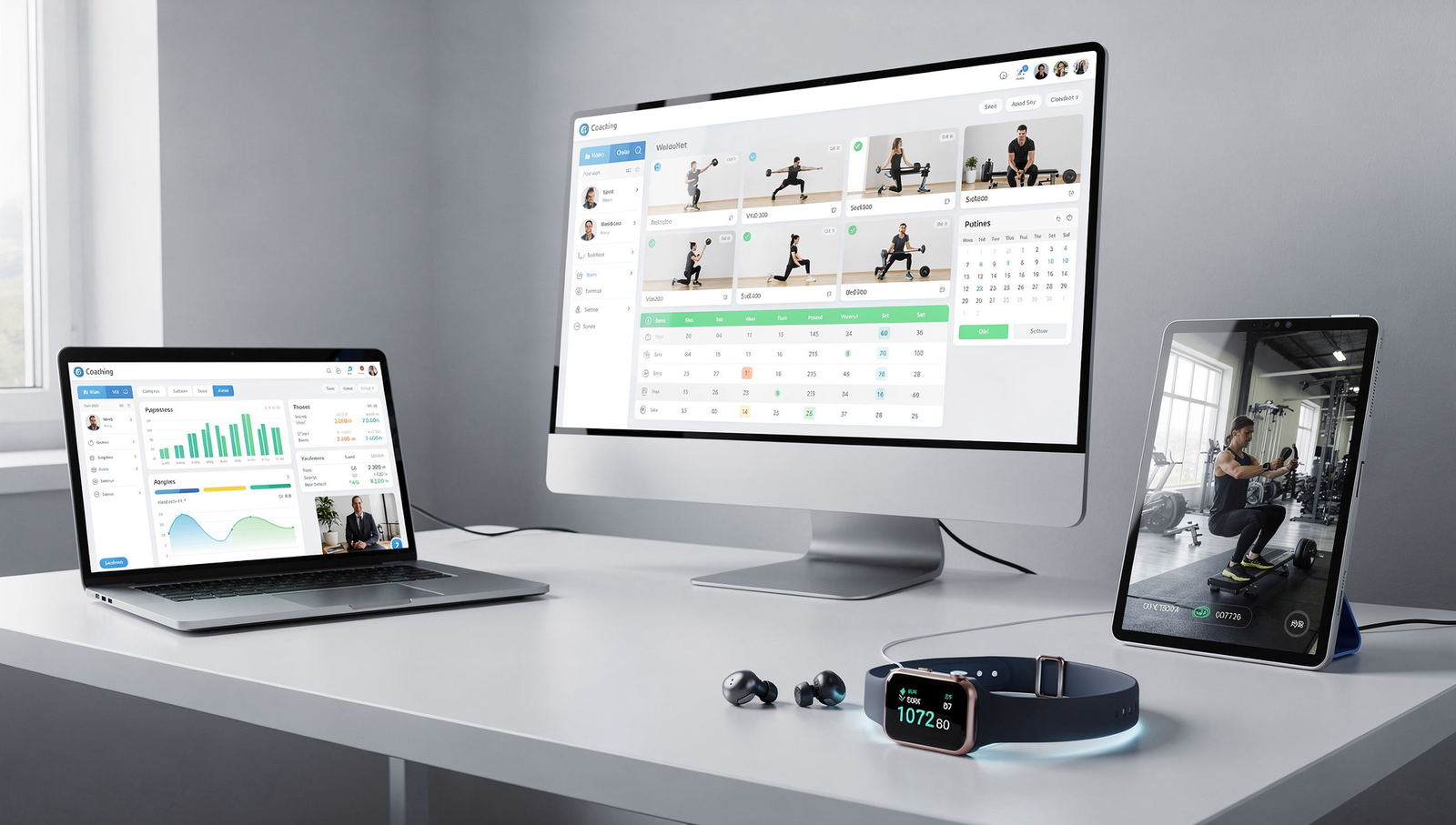
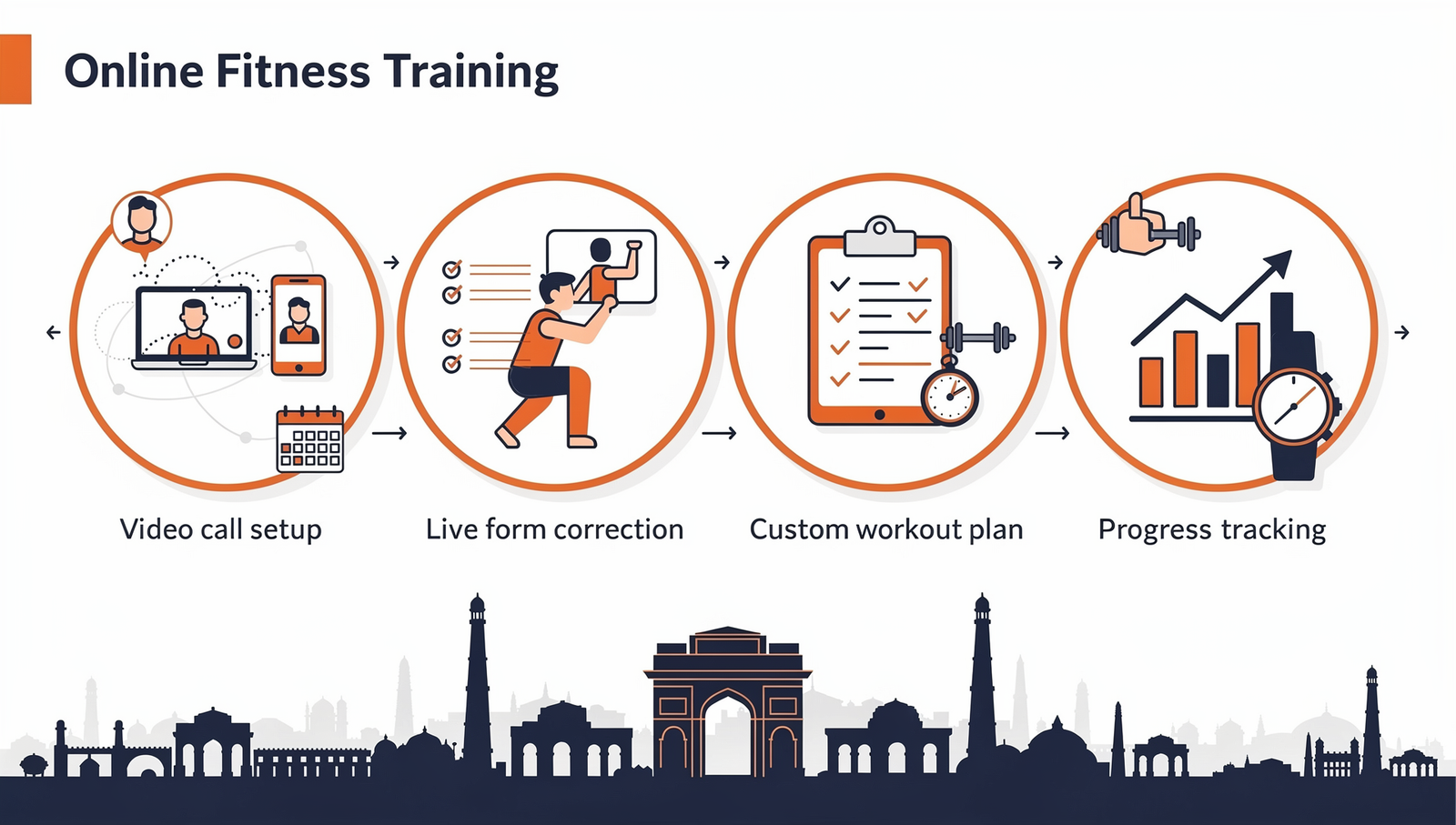
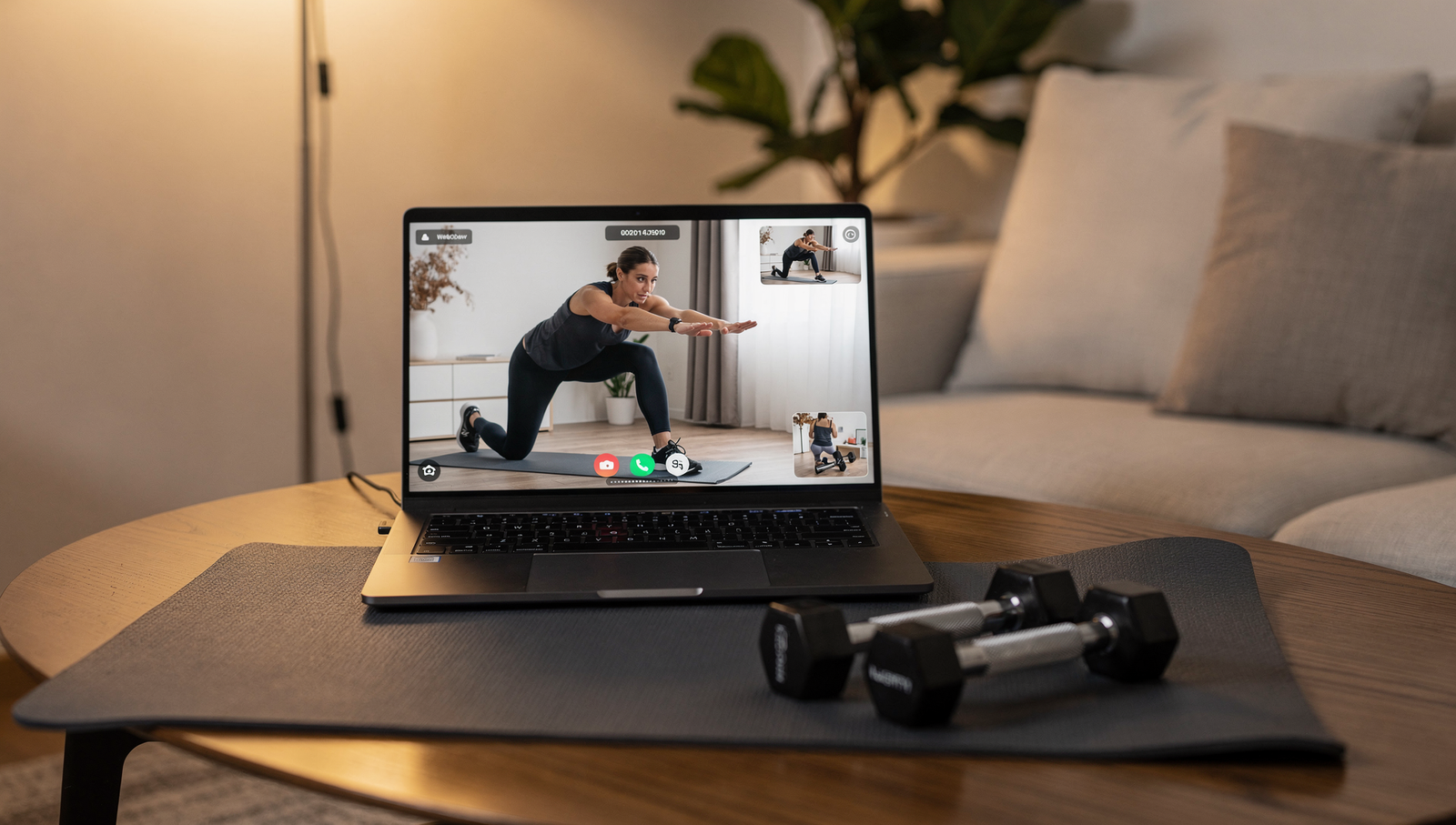
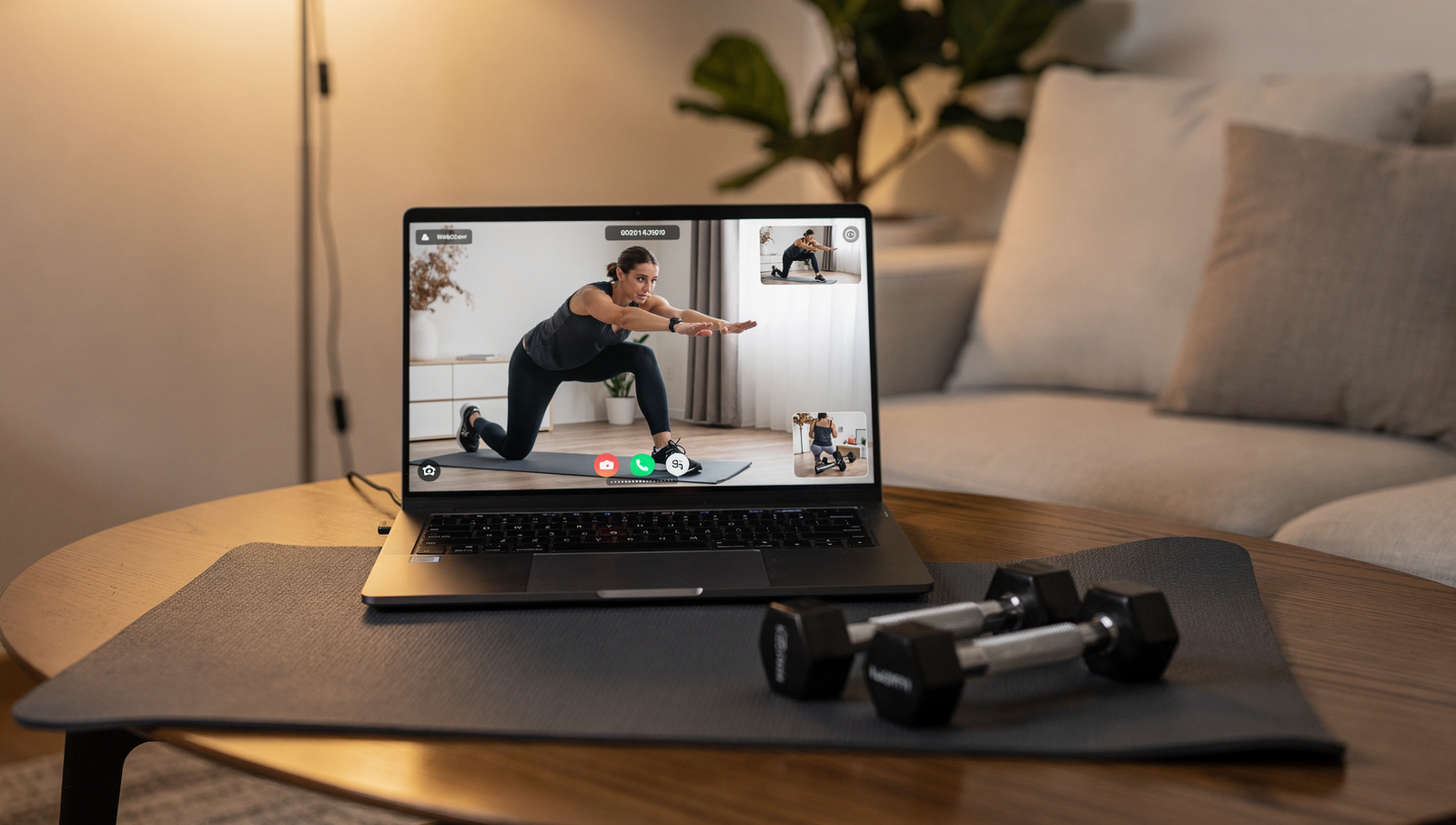
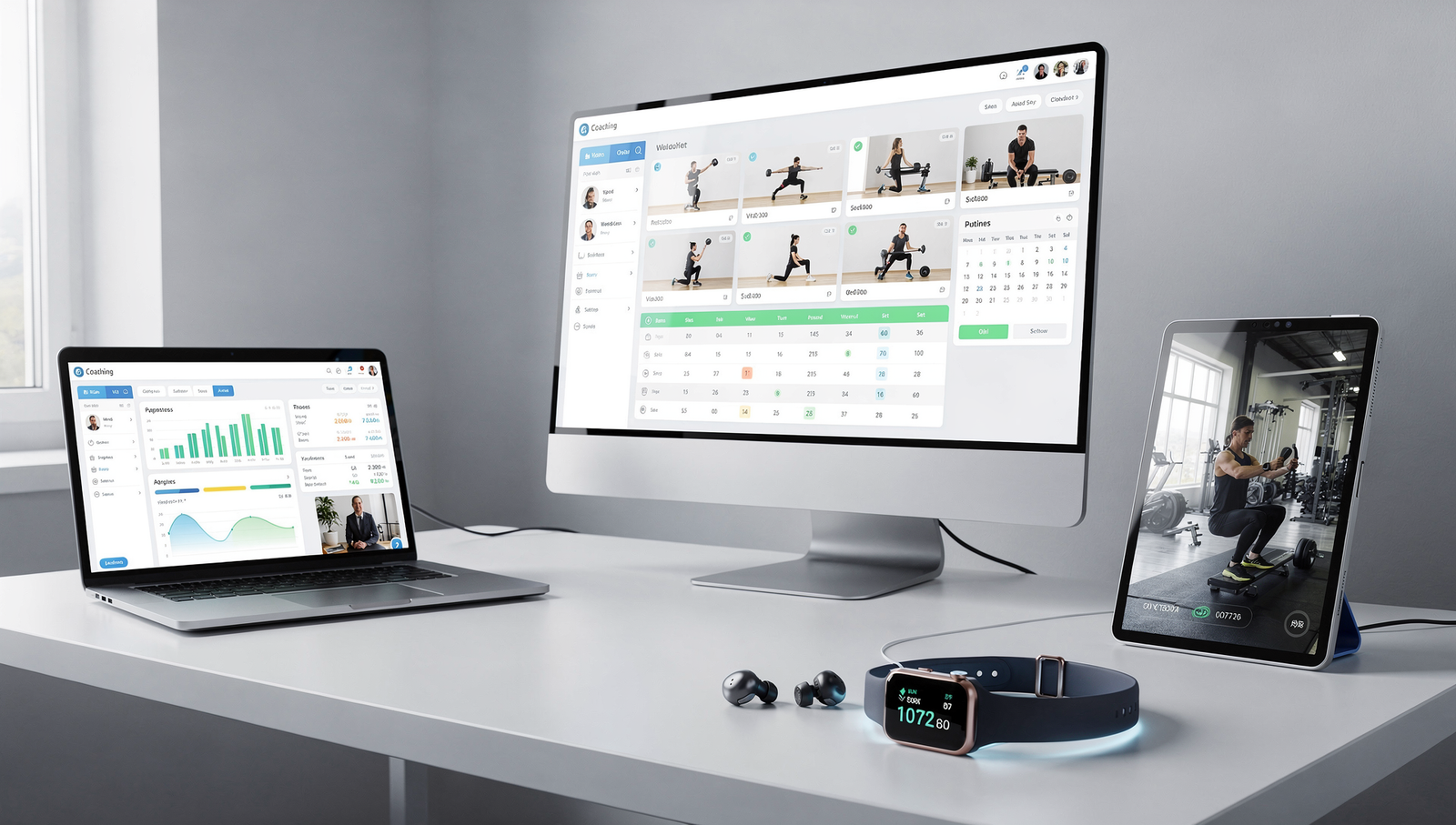
A good online fitness trainer delivers a structured coaching experience. The service starts with an assessment over video.
They watch you move through basic exercises like squats, push-ups, and overhead reaches. This replaces the in-person assessment you would get at a gym.
Your customized weekly plan follows. It includes specific exercises, sets, reps, rest periods, and progression rules. Each week, the plan adapts based on your feedback.
If a shoulder exercise bothers you, the trainer swaps it for a variation targeting the same muscles without irritation. This is what separates online coaching from a generic workout PDF.
Form review happens through recorded clips. You film yourself performing exercises and send the footage to your trainer.
68%
of Delhi fitness enthusiasts who switched to online training reported higher consistency compared to their previous gym routines, according to a 2025 fitness industry survey
Over multiple sessions, this builds your movement literacy. You learn what good form feels like. That reduces your injury risk even when training alone.
Regular check-ins keep you accountable. Most online trainers schedule weekly or biweekly calls to review progress and adjust programming.
Equipment and Space Requirements for Home Training
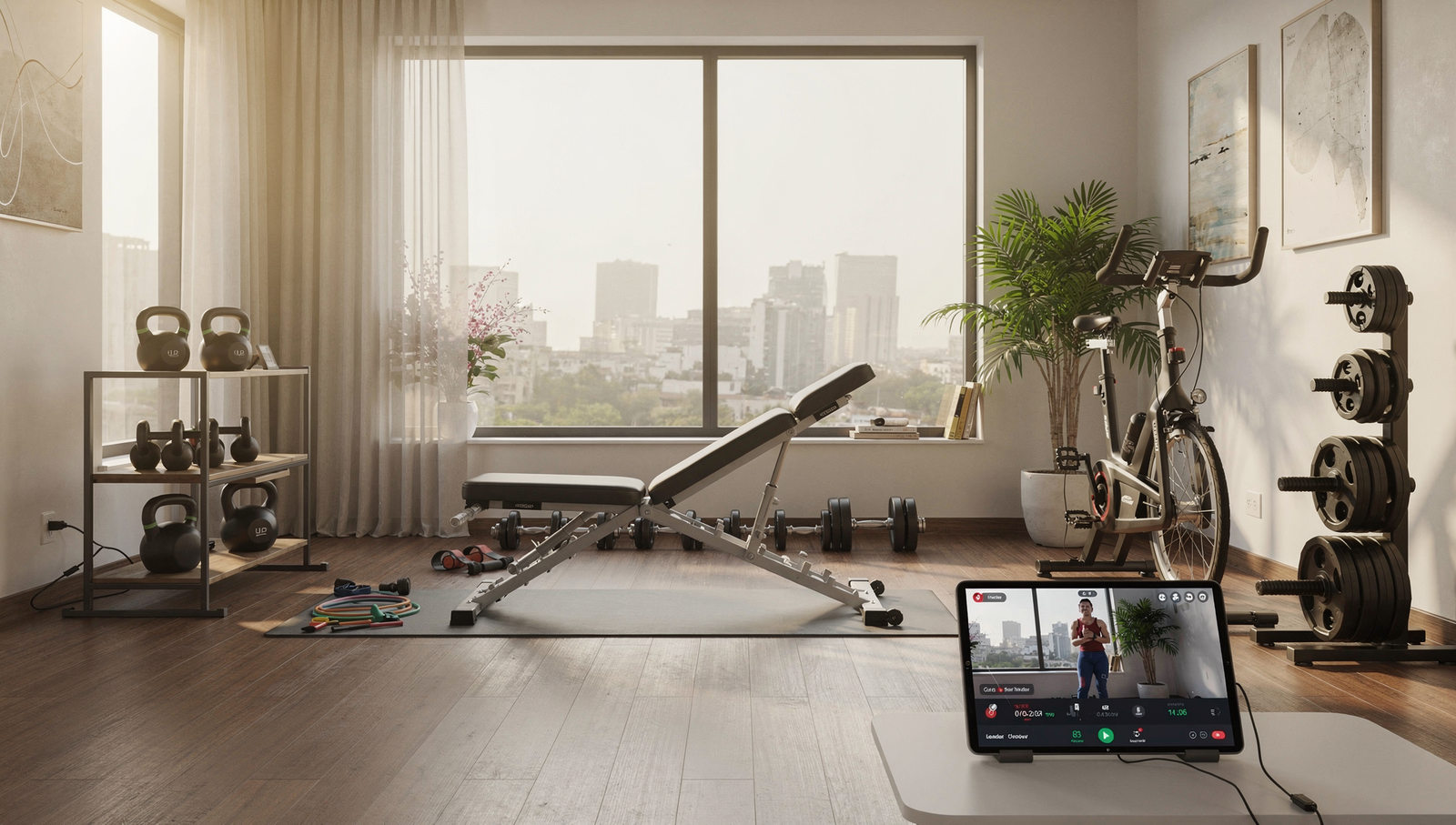
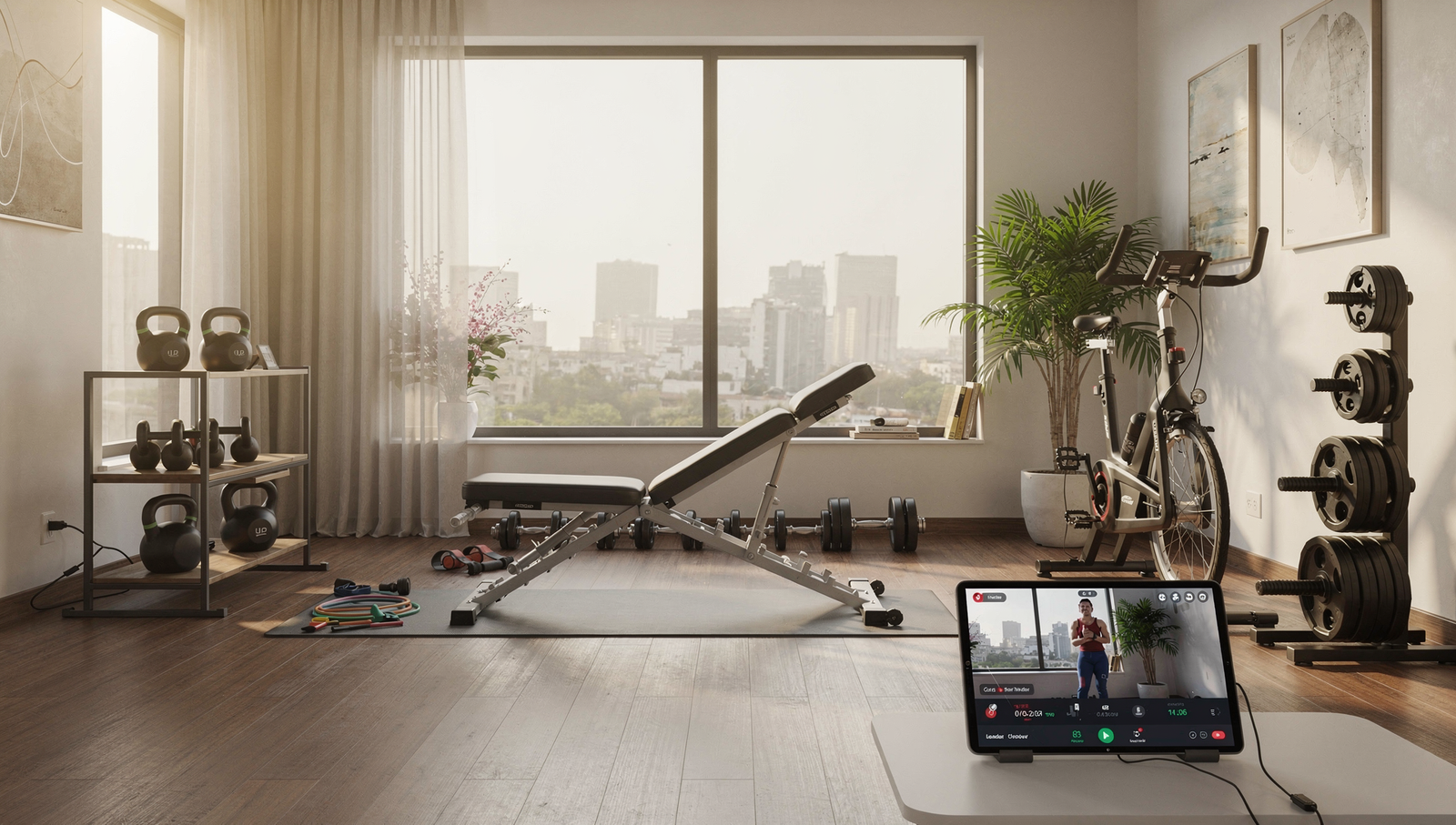
You do not need a garage full of equipment to train effectively at home. An online fitness trainer designs programs around what you actually have.
Bodyweight squats, lunges, push-ups, glute bridges, and planks need nothing more than that. This is enough to build a solid foundation over the first four to six weeks.
A pair of adjustable dumbbells or a single kettlebell expands your options. With those, you can add resistance to rows, presses, deadlifts, and carries.
These items cost between 2,000 and 6,000 rupees. They fit in a small apartment without issue.
A pull-up bar is worth considering if your doorframe can accommodate one. Pulling movements are often neglected in home programs.
Even if you cannot do a full pull-up yet, resistance bands assist the movement. You can build up to unassisted reps over time.
Space constraints in Delhi apartments are real, but manageable. You need roughly two meters by two meters of clear floor space.
If you train in a shared space, set a workout window. Communicate it with family or roommates so you are not blocking a common area during peak hours.
How Delhi Traffic and Weather Make Online Training Practical
Delhi traffic is not just an inconvenience. It is a fitness killer. A gym session that should take ninety minutes can stretch to three hours when you factor in travel, parking, and the trip back home.
Three weekly sessions become a four-hour time commitment before you have lifted a single weight. Online training eliminates that cost entirely.
Summer heat between March and June makes outdoor exercise genuinely risky. An online trainer structures your session around an air-conditioned or well-ventilated space.
Monsoon season between July and September creates a different version of the same problem. Waterlogged roads turn short commutes into long waits.
Air quality is another Delhi-specific factor. On days when the AQI spikes above 200, outdoor running becomes counterproductive.
An online fitness trainer can adapt your programming for low-impact indoor alternatives on those days. You do not lose training quality just because the air quality outside has
dropped.
For more on how Delhi-specific factors should shape your fitness decisions, our article on how to choose a personal trainer in Delhi covers additional considerations for selecting the right coaching approach.
Why Online Fitness Training Makes Sense for Delhi Specifically
Delhi commuters spend an average of two and a half hours in traffic every day. That is time that vanishes before your workout be
gins. Three weekly gym sessions become a four-hour time commitment before you have lifted a single weight. Online training eliminates that cost entirely.
Summer heat between March and June makes outdoor exercise genuinely risky. An online trainer structures your session around an air-conditioned or well-ventilated space.
Monsoon season between July and September creates a different version of the same problem. Waterlogged roads turn short commutes into long waits.
Air quality is another Delhi-specific factor. On days when the AQI spikes above 200, outdoor running becomes counterproductive.
How to Stay Motivated Without In-Person Accountability
The biggest concern people raise about online training is motivation. In a gym, the environment pulls you in. At home, it is just you and a screen. That shift is real.
It requires deliberate habits to stay on track. Treat your workout window like a non-negotiable appointment.
Delhi professionals are good at honoring external commitments. Use that discipline for your training.
Create a dedicated training space. This does not need to be a full room. A cleared corner works.
The key is that when you step into that space, your brain associates it with movement. Do not use it for scrolling or laptop work. Over time, that environmental cue makes it easier to shift into workout mode.
Track your progress in writing. Keep a simple training log. Record the exercise, weight used, reps complet

ed, and how the session felt.
Two weeks from now, you will not remember what you lifted last Tuesday. A log makes progress visible. It also gives your trainer concrete data to work with during check-ins.
Set process goals alongside outcome goals. A goal like “lose twenty kilograms” takes months to achieve. Pair it with process goals like “complete three sessions per week for the next four weeks.”
Process goals create small wins that compound into larger results.
How to Evaluate an Online Trainer
Not all online fitness trainers operate at the same standard. The digital format makes it easier for underqualified people to present themselves as coaches. Here is how to separate serious professionals from those who are not equipped to guide you safely.
Check credentials first. Look for recognized certifications such as ACE, NASM, ISSA, or REPs India. Ask about specializations.
A trainer with additional credentials in corrective ex
ercise or sport conditioning is a stronger choice than one whose primary certification is several years old. Ask them directly what additional education they have completed in the last two years.
Ask for client results similar to your situation. You want to see people who started at a comparable fitness level with similar constraints. Transformation photos alone are not useful.
Ask about the process: how long it took, what the programming looked like, and what obstacles the client faced. Specific answers reveal whether the trainer understands realistic progress.
Evaluate communication style during the consultation call. A good trainer asks more questions than they give answers. They want to understand your constraints and what has not worked for you.
A trainer who spends the entire call pitching their program is not listening to you. That mismatch will continue if you sign up.
Our article on sports performance training in Delhi discusses how to assess coaching quality for performance-focused goals. While it targets athletic training, the evaluation principles apply broadly to any online coaching relationship.
Red Flags in Online Training Programs
Some warning signs are easy to miss during an enthusiastic initial conversation. Being aware of them before you commit protects your time and your money.
Promises of dramatic transformations in four to six weeks are the most common red flag. Real change requires months of consistent effort. A trainer who guarantees rapid results is not managing your expectations realistically.
You will leave the program feeling like you failed rather than recognizing that the promise was unrealistic from the start.
Be cautious of trainers who recommend expensive supplements as a requirement. Nutrition and training are the foundation. Supplements are optional additions at best.
A trainer who insists you must buy a specific product to see results has a financial incentive tied to your purchases. That conflict of interest should concern you.
Key point: A trainer who insists you buy their own supplements or products is prioritizing their income over your results. The best trainers recommend evidence-based nutrition and let you choose your own supplement path if any.