
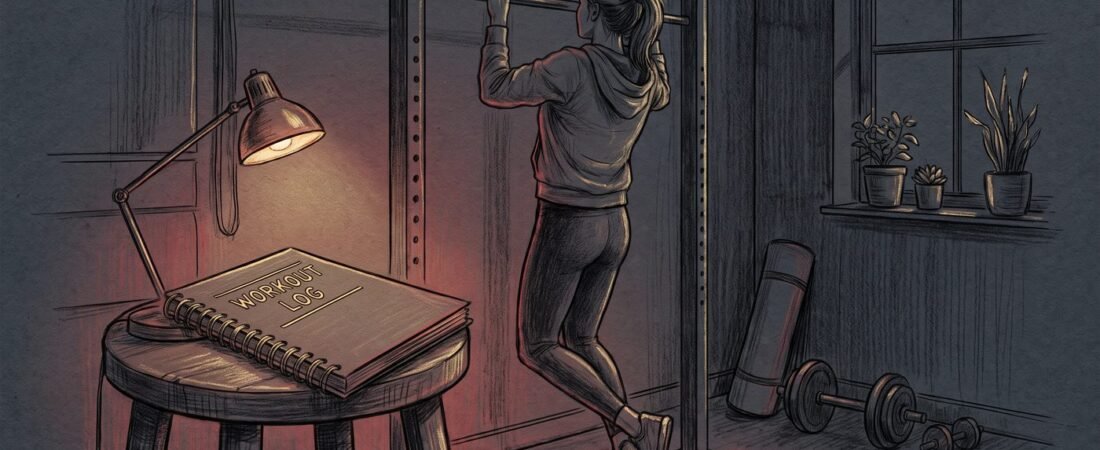
Most beginners never do a pull-up. Not because they lack motivation, but because the first one is genuinely hard. The bar is fixed, the barbell is not, and there is no easy “half rep” you can negotiate. If a trainer told you 80% of Delhi gym-goers could not do a single strict pull-up, most would assume they are exaggerating. They are not. The first unassisted pull-up is the most common strength milestone people chase and stall on, usually for years.
This guide walks through the actual progression from assisted pull-ups to a clean strict set, with the specific sets, reps, and readiness gates that tell you when to move up. If you have a bar at home, a lat pulldown machine at the gym, or even a ring at a Delhi studio, the progression works the same way. The gates do not care what your equipment is. They care about whether your body is ready.
The Starting Point: What “Assisted Pull-Up” Actually Means
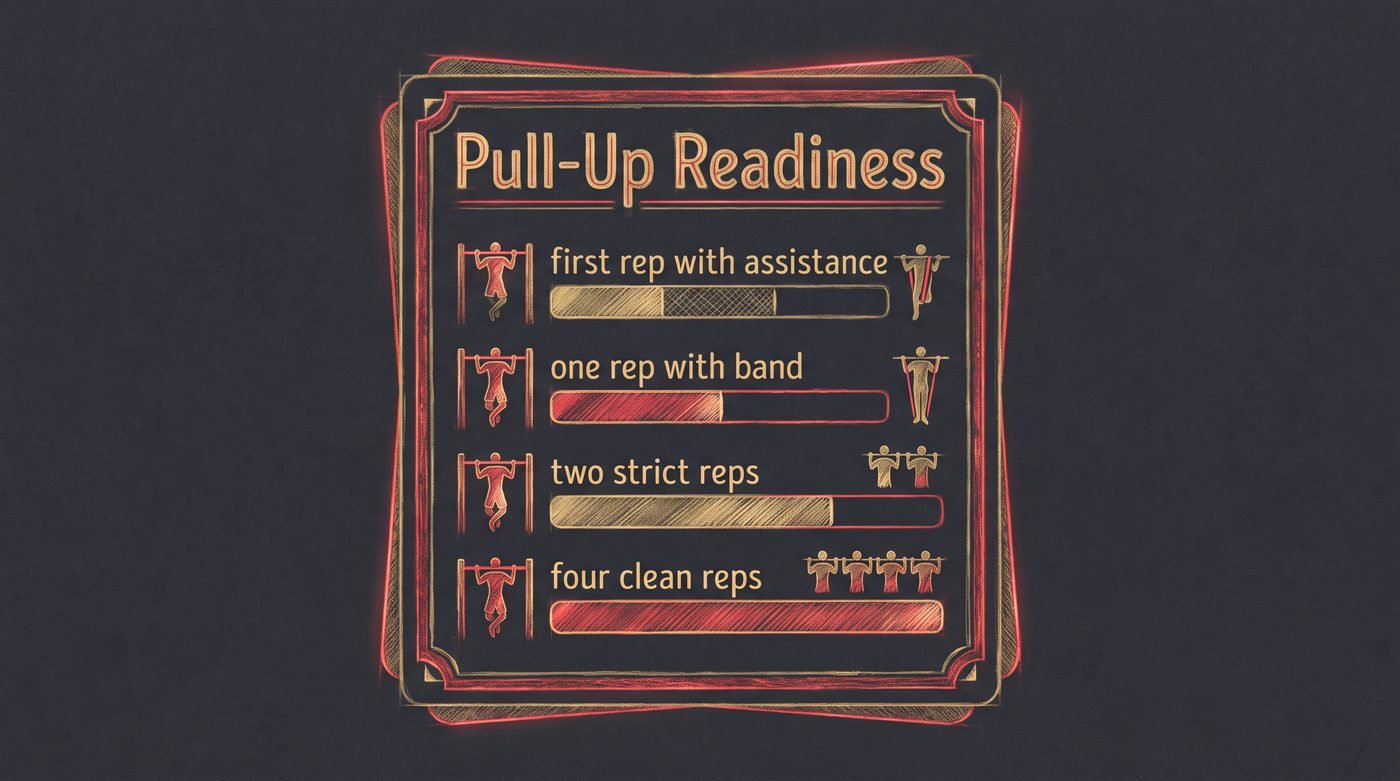
Before any progression, you need to know which rung of the ladder you are standing on. There are four meaningful positions, and they are not the same thing:
- Assisted first rep. You complete a full pull-up only with help – a resistance band, a machine with counterweight, or a partner spotting. You still do not own the rep.
- Band-assisted pull-up. A single band gives you enough support that you complete the rep with clean form, but the band is doing roughly 30% to 50% of the work. You can do 3 to 5 reps of this.
- Two strict reps. No assistance. You complete two clean pull-ups with full range of motion. This is the threshold gate most beginners underestimate.
- Four clean strict reps. You can perform four strict pull-ups with no kipping, no half range, no bouncing. This is where the standard “pull-up program” begins.
If you cannot do a band-assisted rep yet, the honest answer is that you should not be doing a pull-up program. You should be doing dead hangs, scapular pulls, and horizontal rows first. A proper horizontal row – an inverted row under a table at home or a row machine at the gym – is where the real foundation is built. Most beginners skip this step and wonder why nothing is progressing after six weeks.
How to Start With the Assisted Work
The assisted phase is not a warm-up. It is where the actual neuromuscular pattern is learned. Here is the structure that works for most people starting from zero:
Phase Structure: Assisted to First Strict Rep
- Dead hang practice. Three to five dead hangs of 15 to 30 seconds, two to three times per week. This builds grip endurance and shoulder stability. Most beginners fail at the top of the pull-up because the grip and shoulder joint collapse first, not because the lats are weak.
- Scapular pulls. Hang from the bar, shoulders slightly shrugged, then pull the shoulder blades down and back without bending the elbows. Five to ten reps, three sets. This is the first two inches of the pull-up that people never train.
- Band-assisted pull-ups. Use a medium or heavy band – not a thin one. Your goal is to complete three to five reps with the band assisting roughly 30% to 50% of your body weight. Start with a heavier band, not a lighter one. Progress by moving to a slightly lighter band every one to two weeks, not by adding reps with the same band.
- Horizontal rows. Two to three times per week, three sets of ten to fifteen reps. This is the single most important accessory movement for pull-up strength if you are in the assisted phase.
The typical timeline from first band-assisted rep to first strict pull-up is four to eight weeks for a motivated beginner training three times per week. If you are already doing some rows and dead hangs, expect three to five weeks. If you are completely new to upper body training, six to ten weeks is normal and not a sign something is wrong.
The Readiness Gates: When to Move Up
Here is where most beginners and even some trainers get it wrong. The gates are not about weeks on the clock. They are about demonstrated reps.
The Four Gates
| Gate 1 | Complete 3 reps band-assisted with the medium band |
| Gate 2 | Complete 5 reps band-assisted with the light band |
| Gate 3 | Complete 2 strict reps with no assistance |
| Gate 4 | Complete 4 strict reps with no assistance |
Each gate should take roughly one to two weeks. If you are stuck at a gate for more than three weeks, the fix is almost never “do more pull-ups.” It is usually that the rows are too easy, the dead hangs are too short, or you are training with too much frequency and not enough recovery. The progression stalls at the accessory work, not at the main movement.
The Strict Rep: What Actually Happens at the Top
The first strict pull-up is not just “pulling yourself up without help.” The mechanics that make it stick are:
- Initiation is the scapula, not the lat. At the bottom of the hang, you first pull the shoulder blades down and back. The elbow stays under the bar for the first few reps. This is the cue that separates a clean pull-up from a kip that looks like a pull-up.
- Chin over the bar, not just touching. A rep that ends with your chin merely touching the bar is not a strict rep. The chin needs to clear the bar. Most beginners do fifty percent of their “strict” reps this way and count them as full reps.
- The descent is controlled. Lowering yourself in two to three seconds – not dropping – doubles the time under tension and builds the eccentric strength that protects the shoulder joint. A fast drop at the bottom of every rep is how beginners develop bicep tendon irritation within a month.
Progressing Past the First Strict Pull-Up
Once you can do two strict reps consistently, the program changes. You are no longer building the pattern. You are building volume and intensity.
Weeks 1 to 3 after first strict rep: Three sets of two to three strict pull-ups, rest two minutes between sets, two to three times per week. Add one strict row workout per week with three sets of twelve to fifteen reps.
Weeks 4 to 6: Increase to three sets of three to four strict pull-ups. Introduce the “one more” rep – after your last set, wait three minutes and attempt one more clean rep. This is where the real strength jumps happen. The first extra rep is usually harder than the entire set before it.
Weeks 7 to 12: Build toward four to five strict reps in a single set. This is the threshold that makes pull-ups feel “normal.” After this point, most people can add weighted pull-ups to their program and start chasing numbers that matter for other exercises.
The Common Stalls and How to Fix Them
Stall 1: The Grip Fails Before the Lats
Most beginners who stall at the second strict rep are not failing because of the lat. They are failing because the grip collapses. The fix is dead hangs. Three to five dead hangs of 20 to 30 seconds at the end of every pull-up session. After two to three weeks, the grip stops being the limiting factor and you will see the strict rep count jump by one or two. If your gym programme is already dense, the how to do a plank correctly guide is a useful pairing – the same core and shoulder stability work that keeps a plank clean also stabilises the dead hang position.
Stall 2: The Elbow Hits the Bar Before the Chin
Some beginners pull to a position where the elbow clears the bar but the chin never does. This is usually a strength gap in the top range – the lat and teres major need more work. The fix: add three sets of eight to ten pull-ups to the top position only, meaning you start from the top and lower down slowly. This is the eccentric variant and it closes the top-range gap faster than full reps.
Stall 3: The Plateau After Three or Four Strict Reps
Getting from one strict rep to three is fast. Going from four to ten is slow. This is normal. The fix is to stop chasing pull-up volume and build the supporting movements: weighted rows, chin-ups (supinated grip, which recruits the biceps more and is easier for most people), and dead hangs. After two weeks of this support work, the strict pull-up rep count usually unlocks another rep or two.
What a Trainer Actually Changes in This Progression
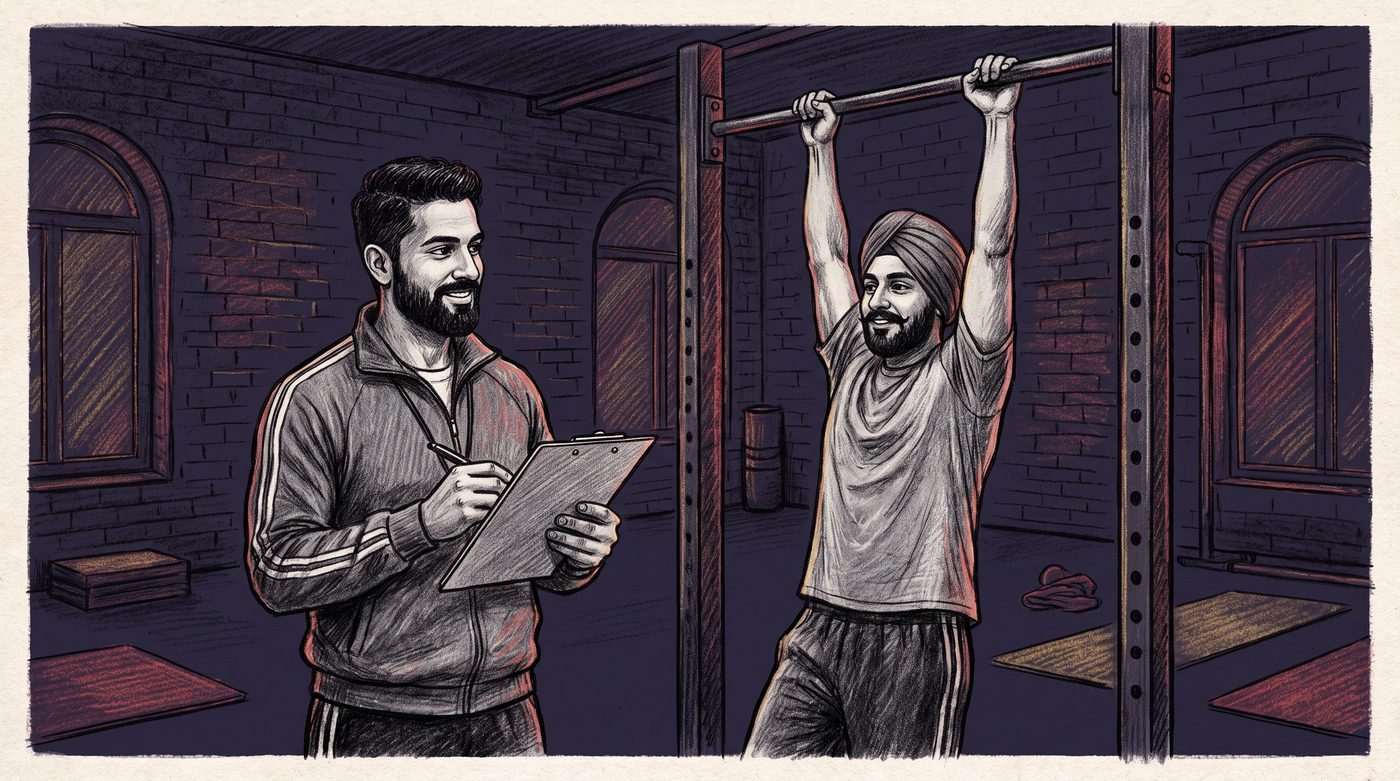
Most people who stall for months are not doing the wrong exercises. They are doing the right exercises with subtle form errors that prevent the top-end strength from developing. A coach who has watched hundreds of beginners do pull-ups can spot the exact breakdown point: is it the scapular initiation, the elbow position, the chin height, or the grip timing. That specificity is what turns a four-month stall into a two-week breakthrough. If you are in Delhi and working with a bar at a studio, this is a natural conversation for your next session with your coach. Pair this progression with a sports fitness coach in Delhi if your pull-ups feed into a broader strength goal – a coach who programmes the whole system beats a bar-only approach for most people.
If you want a structured pull-up progression built around your current rep count, a dedicated training plan removes the guesswork entirely. The right plan adjusts the band weight, the row volume, and the strict set structure every two weeks based on what you actually did the previous week. Beginners training the same bar twice a week usually plateau around four strict reps without one of these adjustments. For anyone starting from scratch, the best workout split for beginners article covers how to fold pull-up work into a full body programme without overloading the back and biceps on the same day.
Frequently Asked Questions
How long does it take to go from zero to one strict pull-up?
For a motivated beginner training three times per week, expect four to eight weeks. If you are already doing some rows and dead hangs, three to five weeks. If you are completely new to upper body training, six to ten weeks is normal and does not indicate a problem with your approach.
Do I need a pull-up bar at home?
Not strictly. You can build the full progression with a lat pulldown machine, rings, or even a sturdy table for horizontal rows at home. A doorway bar is ideal for dead hangs and scapular pulls, but it is not required. A lat pulldown machine at a commercial gym can substitute for the strict pull-up work, though it is slightly less effective for the top-end range.
How many times per week should I train pull-ups?
Two to three times per week is the sweet spot for the assisted phase. More than that and the recovery debt compounds quickly – grip and bicep tendons in particular need 48 to 72 hours between sessions. If you are in the strict rep phase, two dedicated pull-up sessions per week plus one row session is enough. Frequency above three per week usually produces diminishing returns for most beginners.
Can women progress on the same gates as men?
Yes. The gates are strength-based, not gender-based. The main difference is that the absolute load relative to body weight is higher for most women in the assisted phase, so the band-assisted reps will feel easier at a lower body weight but the strict rep threshold takes the same number of training weeks. The readiness gates – two strict reps, four strict reps – work identically regardless of starting point.
What if I can do three strict reps but not four for weeks?
Stop adding pull-up volume. Shift the emphasis to weighted rows and dead hangs for two to three weeks. The fourth strict rep almost always comes after the supporting movements close the gap. Trying to force it by doing more pull-up sets is the fastest way to extend the plateau, not end it.
Book a Session
If you are in Delhi and want a pull-up progression that is built around your current ability – not a generic program – Richi Fitness works with clients at studios and at home across the city. The first session includes a movement assessment, a rep count test, and a written progression plan with specific band weights and row sets. Call or WhatsApp +91-96549-26593 to book.