
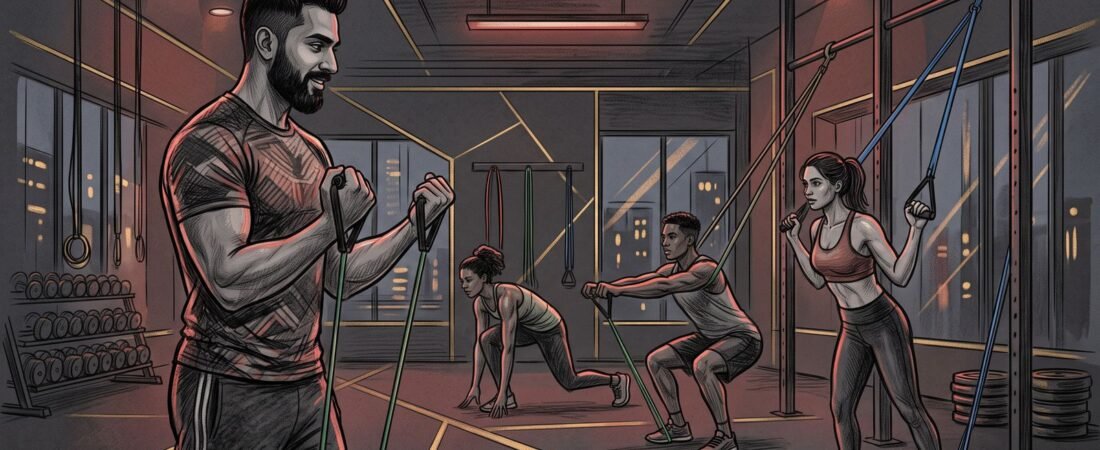
Small Group Training Built Around Boxing Conditioning
Most gyms run one class for everyone. The same playlist, the same pace, the same cues from a single coach. That works for a warm-up, and it falls apart the second you start throwing combinations at full effort.
Boxing is a good test of that. In a typical 30-second round, the work-to-rest ratio changes mid-round, your hands need different feedback on heavy bags than on the pads, and two clients on the same schedule can be a full skill level apart. A coach running a small group of four to eight has to build every element – rounds, pad work, conditioning, rest – so that nobody is left guessing.
This is how a structured small group program for boxing conditioning actually gets put together, and why the 30-minute round format is the one detail most casual classes get wrong.
Why 30-Second Rounds Shape the Whole Session
Every serious boxer works in 30-second work-to-rest cycles, typically one minute on and one minute off. When you build a class around that cycle, every segment in the session inherits the rhythm:
- Warm-up: 3 rounds of jumping rope plus mobility work, 30 seconds on and off
- Technique: 4 rounds of pad combinations, with new cues each round
- Conditioning: 3 rounds of sprints, step-ups, or sled pushes
- Finisher: 2 rounds of the hardest element on the day
The total math works out to roughly 40 to 50 minutes of structured work, which fits a 60-minute session with transitions and feedback. The 30-second unit also gives the coach a natural checkpoint: after each round, one quick correction beats waiting until the end of the segment to say something no one heard.
Pad Work Is Where the Small Group Difference Shows
On a heavy bag, the feedback loop is self-contained. You hit, the bag gives you data, you adjust. The pads remove that loop entirely – everything you do is corrected by the coach’s hands, and the correction happens while the coach is also moving the pads, calling the combination, and managing the client’s timing all at once.
That is a lot for one coach to do for one person. It is impossible for twelve. A small group of four to eight splits into two stations while the coach works through pad rounds in pairs, which cuts the wait time between pad work and recovery. Clients rotate: pad station A, heavy bag station B, conditioning corner. The coach stays at the pad station giving live feedback while the other stations run in parallel, so the group’s total active time per session goes up without the coach spending every second of the hour on a single client.
How Rounds, Pad Work, and Conditioning Fit Into One Session
The session above (warm-up, technique, conditioning, finisher) looks simple, but the coaching decisions inside it are what separate a programmed class from a workout that just happens to include boxing elements:
- Combinations rotate by day, not by feel. Day 1 is jab, cross, jab. Day 2 adds the lead hook. Day 3 is the same two combinations plus a defensive layer. The rotation keeps new patterns from fossilizing.
- Conditioning follows the technique. If the day’s focus is head movement, the conditioning element adds lateral steps. If the focus is core stability, it is anti-rotation work, not another set of squats.
- Rest is programmed, not given. The one-minute rest between rounds is the rest window. Doing extra work or talking during it changes the entire conditioning profile of the session.
None of this is visible to a client walking into the class. It is the reason the session ends at the same quality it started with, rather than devolving into the last ten minutes being the least effective part of the hour.
Scaling Intensity for a Group That Is Not at the Same Level
A group of six is rarely six clients at the same place in the program. Someone three weeks in is still learning jab mechanics while someone six months in is working on head movement under fatigue. Scaling for a small group works on two dials:
- Volume dials down, never technique away. A new client does the same combinations as everyone else at 50 to 60 percent of the working pace. They get the full session structure without being pulled into a lower-intensity segment that no longer matches the group’s level.
- Conditioning substitutions. When the day’s finisher is a sprint element, the substitution is the same sprint structure at reduced distance or reduced reps – not a completely different movement. The substitution trains the same metabolic pathway at a lower load, which keeps the group moving as one unit.
The coach’s note after each session is where the individual programming lives. The session is shared; the adjustment for the next session is not. A client who struggled with footwork on day 2 gets a drill built into the day 3 warm-up. That is the part of small group training that a single-client session cannot replicate: the coach holds the program for the whole group and the individual in their head at the same time.
What a Sample 8-Week Boxing Conditioning Progression Looks Like
The progression below is a realistic eight-week structure for a small group program. It assumes clients are already in the program and are not doing a separate technique course alongside:
| Weeks 1-2 | Jab, cross, lead hook. Conditioning: jump rope plus step-ups. Focus: technique under light effort. |
| Weeks 3-4 | Combinations add defensive layer. Conditioning: sprints, 3 rounds at 30-second intervals. Focus: footwork under fatigue. |
| Weeks 5-6 | Full combinations with head movement. Conditioning: sled push or rowing at sustained effort. Focus: core stability through the combinations. |
| Weeks 7-8 | Two 3-minute high-intensity rounds with a 30-second break. Focus: the conditioning profile of a fight round, not just the technique of one. |
Weeks 7 and 8 are where the program shifts from a class to a measured system. The 3-minute high-intensity rounds are not casual sprints; they are the same work-to-rest ratio used in competition. That is when the difference between a programmed session and a random workout becomes visible, and when the data from the coach’s notes starts to matter.
Small Group vs. 1-on-1: Where Each Wins
The honest answer is that neither is better in every situation. The split:
- 1-on-1 wins on feedback depth. A single client gets every second of the coach’s attention. Technique corrections, load management, and individual programming all benefit from that. If the goal is a specific injury, a competition timeline, or a technical problem that has been resisted in a group, 1-on-1 is the right tool.
- Small group wins on pace and consistency. The session is programmed to the group’s average. There is no day where the coach is waiting for one client to catch up, and the pace floor is set by the next person up, not by the slowest person in the room. For maintenance, general conditioning, and people whose goal is to train regularly without a coach in the room every time, the small group program gets them there faster and cheaper than 1-on-1.
- The rotation rule. Most programs in this space run 8 weeks of small group, then a check-in, then either back to small group or into 1-on-1 for the next phase. The rotation is what keeps the small group from becoming the ceiling instead of the foundation.
How Often Should You Do Boxing Conditioning in a Small Group
The frequency question has a simpler answer than most people expect. For a group program, two to three sessions per week is the floor that produces a measurable result in eight to twelve weeks. One session per week is a maintenance dose, not a training dose: the skill elements move slowly and the conditioning gains from a single session are largely lost by the next one. Three sessions per week is where the 8-week structure above starts to compound, and where the coach’s notes begin to show a pattern that is worth building into the next block.
The gap between sessions matters as much as the count. Two days of rest between sessions is the minimum. One day is enough for a healthy client; it is too little for someone who is still in the new-client phase of the program, and it is where the injury risk sits.
FAQ
How many people are in a typical small group session?
Four to eight. Below four, the pace floor drops and the group dynamic that makes the format work disappears. Above eight, the pad station queue stretches and the coach loses the ability to give live feedback to everyone who needs it.
Do I need to know how to box before joining?
No. The program starts from the first combination and builds up. The 30-second round structure means the skill ceiling is high enough for someone in week one to do the same session as someone in week eight, just at a different pace.
What equipment do I need for the sessions?
Boxing gloves are the only thing you need to bring for the early weeks. The gym provides pads, heavy bags, and the conditioning equipment. Most programs give you a basic pair of 12-ounce training gloves to start; you only need hand-wrapping gear if you go past the first month or two.
Is this program right for someone doing 1-on-1 training elsewhere?
Usually not as a simultaneous addition. The two programs compete for the same recovery budget. The standard approach is to finish a 1-on-1 block, then move into the small group program for a conditioning phase, then back to 1-on-1 for the next technical phase. The rotation is what keeps the two formats from overlapping.
Every program on the schedule is running on that same structure. The 30-minute round, the pad station rotation, the individual scaling. The only thing that changes from client to client is the pace inside it. That is the difference between a class and a coached small group session, and it is the part of the program that shows up in the results.
If you want to see how the sessions are actually run in the studio, small group personal training at Richi Fitness walks through the station setup, the client flow, and what the coaching looks like from the pad station. If you are not sure which group size fits your goals, group personal training in Delhi covers the session structure, the pacing, and the cost breakdown so you can see where small group and full group sessions land. And if the goal is specific to boxing rather than the conditioning general, sports fitness coaching at Richi Fitness covers how sport-specific programs are built, including the boxing pathway.