
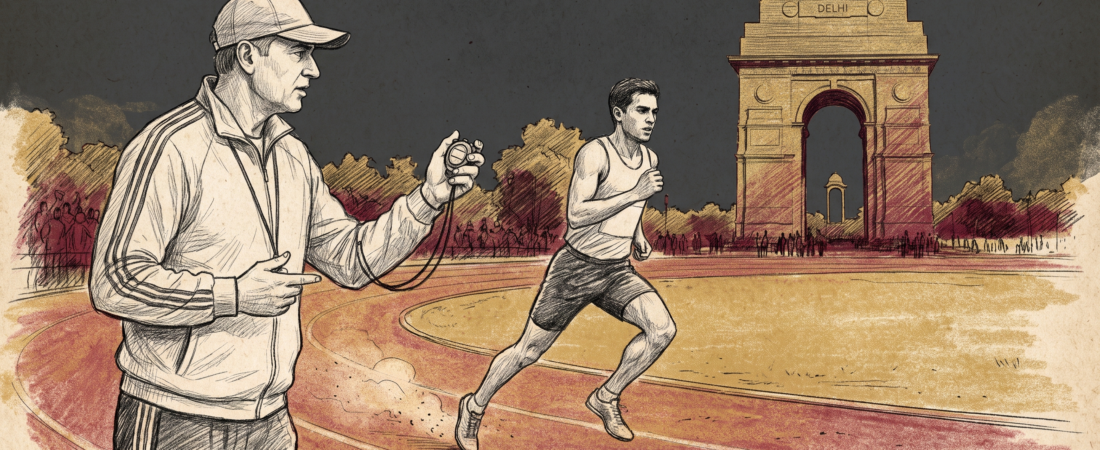
Finding the right athlete trainer in Delhi can make the difference between a good season and a great one. Whether you play cricket, football, badminton, or track and field, a specialized trainer who understands sports performance and injury prevention gives you a real competitive edge.
Richi Singh, based in Delhi, has trained athletes across multiple sports for over a decade. His approach combines strength development, speed work, and sport-specific conditioning into programs built around each athlete’s goals and schedule. Every athlete who trains with him gets a program designed for their sport, not a generic gym plan.
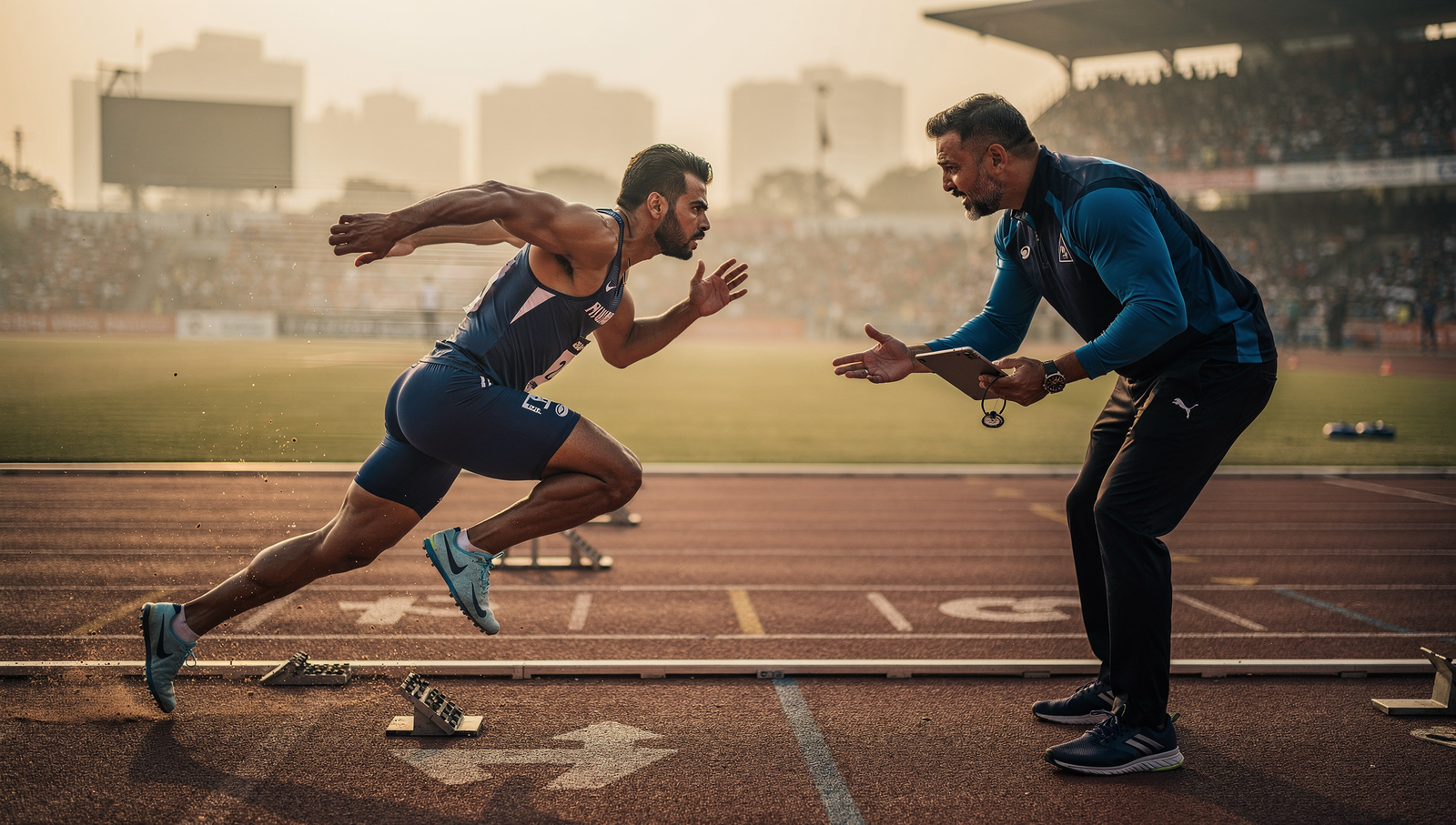
Elite sprint training at dawn on Delhi track
What Does an Athlete Trainer in Delhi Actually Do
An athlete trainer does more than write workout plans. The role covers movement assessment, performance testing, periodized training schedules, and injury prevention strategies. For a Delhi-based athlete, the right trainer should also understand the local conditions – heat management for summer training, ground availability, and how to balance training around work or college commitments.

A solid athlete trainer starts with an assessment. They measure speed, power, agility, and endurance to establish a baseline. Then they build a program that progresses week by week toward the athlete’s competition or performance goal. This is different from general personal training because the focus is on transferable athletic qualities, not just appearance or general health.
The assessment typically includes movement screening tests like the overhead squat, single-leg balance, and shoulder mobility checks. These reveal asymmetries and compensations that could cause injuries if left unaddressed. A trained eye can spot a weak glute or a restricted shoulder in seconds – problems that generic fitness assessments often miss entirely.
When searching for an athlete trainer in Delhi, look for someone with credentials in sports science or strength and conditioning. Experience working with your specific sport matters too. A trainer who understands cricket movement patterns will build different programs than one focused on track sprints.
>
How Sports Performance Training Differs From Regular Gym Training
Regular gym training improves strength and fitness. Sports performance training improves the specific physical qualities that help you perform better in your sport. The difference shows up in how programs are structured and what gets measured.
An athlete trainer programs around key performance indicators. A sprinter needs explosive power and reaction time measured in hundredths of a second. A football player needs change of direction speed and endurance over 90 minutes of running. A badminton player needs lateral movement speed and racket-arm power for repeated smashes. Each of these demands a different approach than a standard hypertrophy or general fitness program.
Delhi’s training scene has plenty of gyms offering personal training, but not many trainers with real sports performance expertise. The best programs combine weight room work with field-based drills, mobility training, and recovery protocols. Athletes who follow this type of structured approach see measurable improvements in their performance metrics within 8 to 12 weeks.
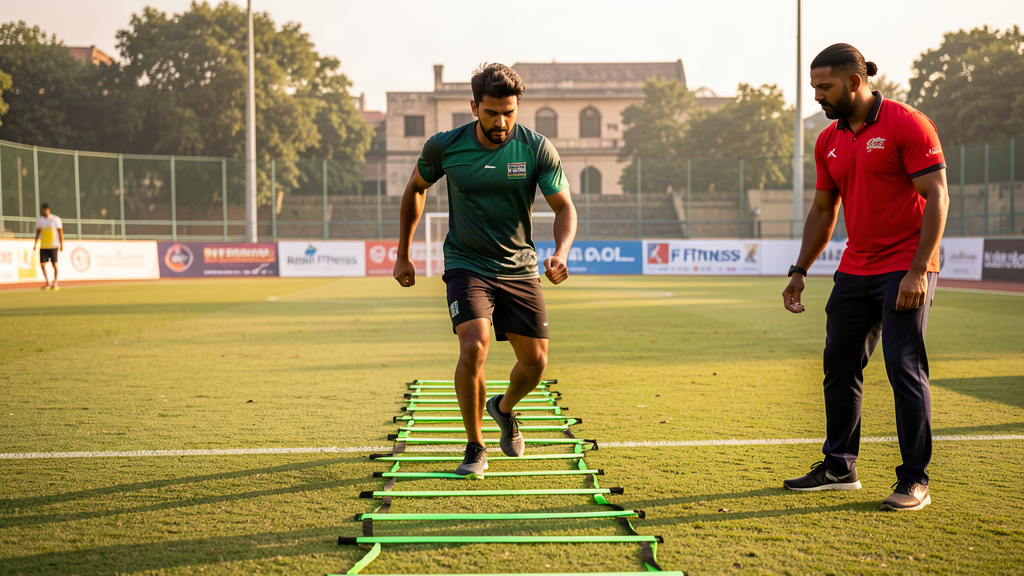
The environment where training happens also matters. A gym with a turf area for sprint work, medicine balls for rotational power, and open space for agility drills is a better fit for athletes than a standard commercial gym with fixed machines only. Delhi has several facilities that cater to athletic training, and choosing the right one alongside the right trainer accelerates progress significantly.
For Delhi athletes looking to take their game seriously, sports performance training in Delhi is the right path. It offers a structured, evidence-based approach that goes well beyond what casual gym-goers get from standard fitness programs.
Key Qualities to Look for in an Athlete Trainer
Not every personal trainer can work effectively with competitive athletes. The best athlete trainers share several important traits. First, they understand periodization – planning training blocks that peak for competition dates. Second, they can assess movement quality and identify imbalances before they cause injuries. Third, they know how to adjust programming when an athlete is competing, traveling, or recovering from injury.
Periodization is where most general trainers fall short. A proper periodized plan divides the year into distinct phases. The off-season builds strength and addresses weaknesses. The pre-season converts that strength into sport-specific power and speed. The in-season maintains fitness while prioritizing recovery between matches. Without this structure, athletes peak too early or arrive at their biggest events underprepared.
Experience with your specific sport is a major advantage. A cricket fitness coach in Delhi who has worked with state-level players will understand the demands of batting, bowling, and fielding in a way that a general trainer never could. They know which muscles get overused, which movement patterns cause common injuries, and what physical qualities separate good players from great ones.
Communication matters too. An athlete trainer should be able to explain why each exercise is in the program and how it connects to the athlete’s goals. If the trainer cannot connect training to performance outcomes, the athlete is less likely to stay consistent – and consistency is where real progress happens. The best trainers can take complex sports science concepts and explain them in terms an athlete can act on.
Training Programs for Different Types of Athletes
Delhi produces athletes across a wide range of sports, and each type needs a different approach. Track and field athletes need explosive power development, sprint mechanics coaching, and event-specific endurance work. Cricket players need rotational power, shoulder stability, and running endurance for long matches across multiple days. Football players need change of direction work, sprint capacity, and contact resilience for 90-minute games.
The foundation stays similar across sports – strength, speed, and conditioning – but the exercise selection and programming structure changes. A good athlete trainer adapts the program to fit the athlete’s sport, position, and competition calendar. This is why generic fitness plans do not work for competitive athletes. A bodybuilder program and a sprinter program might both use squats and deadlifts, but the rep ranges, rest periods, and progression models are completely different.
For Delhi-based cricketers specifically, working with a trainer who understands the game is especially valuable. Cricket fitness coaching in Delhi has grown significantly as more players recognize the advantage of structured athletic preparation over casual practice alone. The physical demands of modern cricket – from T20 power hitting to multi-day Test match endurance – require targeted conditioning that generic training cannot provide.
Young athletes in Delhi often juggle school, coaching commitments, and family expectations alongside their training. An experienced athlete trainer builds programs that fit into busy schedules without compromising results. This might mean shorter, more intense sessions on weekdays and longer conditioning blocks on weekends. The best trainers are flexible without sacrificing structure.
How to Start Working With an Athlete Trainer in Delhi
Starting with an athlete trainer should begin with a conversation about goals. Be clear about what you are trying to achieve – whether that is making a state team, improving a personal best, or recovering from an injury that has kept you off the field. The trainer should then propose an assessment and a plan before any actual training begins.
Most athlete trainers in Delhi offer an initial consultation or assessment session. Use this to evaluate how well the trainer understands your sport and your specific challenges. Ask about their experience with athletes at your level. A trainer who has worked with beginners and elite athletes will have a broader toolkit than someone who only works with one population.
Prepare for the first session by bringing relevant information – past injuries, current training routine, competition schedule, and any performance metrics you already have. The more context the trainer has, the faster they can design a program that works for you. A good trainer will also ask about your recovery habits, sleep patterns, and nutrition – factors that directly affect training outcomes.
Richi Fitness in Delhi has built its reputation on athletic performance training. Programs are built around each athlete’s sport, schedule, and goals. Whether you are a young cricketer looking to make your school team or a competitive track athlete chasing a personal best, working with the right trainer accelerates your progress.
What Results Can You Expect From Professional Athletic Training
Results from athletic training depend on the athlete’s starting point, the quality of the program, and consistency of effort. For most athletes, measurable improvements show up within 6 to 8 weeks. Speed, power, and endurance qualities respond quickly to well-structured training. Sport-specific skills improve when the physical foundation is strong.
Long-term development is where professional athletic training really pays off. A well-structured program builds resilience – not just for one season, but for years of competition. Athletes who train consistently with a qualified trainer experience fewer injuries, recover faster between matches, and maintain performance levels as they age.
The investment in an athlete trainer in Delhi pays off not just in performance gains, but in longevity. An athlete who avoids injury and maintains strength through their competitive years gets far more from their sport than someone who burns out or breaks down from poor preparation. The physical foundation built with a trainer stays with you even when competition schedules change.
Many Delhi athletes wait until they are already injured or underperforming before seeking professional help. The most successful athletes start working with a trainer proactively – building their physical capacity before it becomes a limiting factor. This preventive approach is what separates athletes who have long careers from those who peak early and fade.
Choose Richi Fitness for Athletic Training in Delhi
Richi Singh brings over a decade of experience training athletes across multiple sports in Delhi. His programs are built around real athletic performance principles – not generic fitness advice. From cricket fitness and sports conditioning to strength and speed development, every program is customized to the athlete’s sport and goals.
Delhi athletes serious about their performance should not settle for a general trainer. Richi Fitness offers the expertise, structure, and accountability that competitive athletes need. Contact Richi Fitness today to discuss your athletic goals and start building a program that actually moves the needle on your performance.

About the Author
Richi Singh — Certified Personal Trainer, Delhi
With over 12 years of coaching experience, Richi Singh specializes in weight management, sports conditioning, and corporate wellness. He has trained celebrities, athletes, and everyday clients across Delhi, combining assessment-driven programming with nutrition guidance for lasting results.
Frequently Asked Questions
What does an athlete trainer in Delhi actually do that a regular gym coach does not?
An athlete trainer programs around your sport’s specific energy systems, movement patterns, and injury risks, not around general fitness. A regular gym coach builds a strength program. An athlete trainer builds a program that makes you faster, more powerful, or more durable in your specific sport. The difference shows up in the warm-up protocol, the load management across your competition calendar, and the recovery work that is built in between sessions rather than tacked on at the end.
How many sessions per week do I need with an athlete trainer in Delhi?
Most athletes in Delhi who are in a structured training block run 4 to 6 sessions per week: 2 to 3 strength and power sessions, 1 to 2 conditioning or sport-specific sessions, and 1 mobility or recovery session. The exact split depends on where you are in your competition calendar. In-season, the volume drops and the specificity increases. Off-season, the volume goes up and the general base is built. The trainer’s job is to manage that rhythm so you peak at the right moment.
Can an athlete trainer in Delhi work with amateur or recreational athletes?
Yes, and that is where the biggest gap in the Delhi market is. Most recreational athletes in Delhi are training with a generic fitness program that has no awareness of their sport’s demands. A weekend footballer who does a standard full-body split is training for a different sport than the one they actually play. An athlete trainer who programs for the footballer’s specific sprint, change-of-direction, and contact demands will get more out of the same training time than the generic program ever will.
What should I look for when choosing an athlete trainer in Delhi?
Three things matter more than the rest. First, the trainer has programmed for your specific sport, not just ‘athletes’ as a category. Second, the trainer runs a movement and load assessment before prescribing, not after you have been training for a month. Third, the trainer manages your training across your entire competition calendar, not just the next 4 weeks. A trainer who does all three is the one who will get you to peak on the day that actually matters.
How long does it take to see measurable performance gains with an athlete trainer?
The first measurable gains in a sport-specific quality usually land at the 6 to 8 week mark for most athletes in Delhi. That is when the base is built and the specific work starts to show. The performance peak, where you are actually faster or more powerful than you have ever been, typically lands at the 12 to 16 week mark if the periodization block is structured correctly. Anyone who promises peak performance in 4 weeks is selling you a crash program, not a training plan.